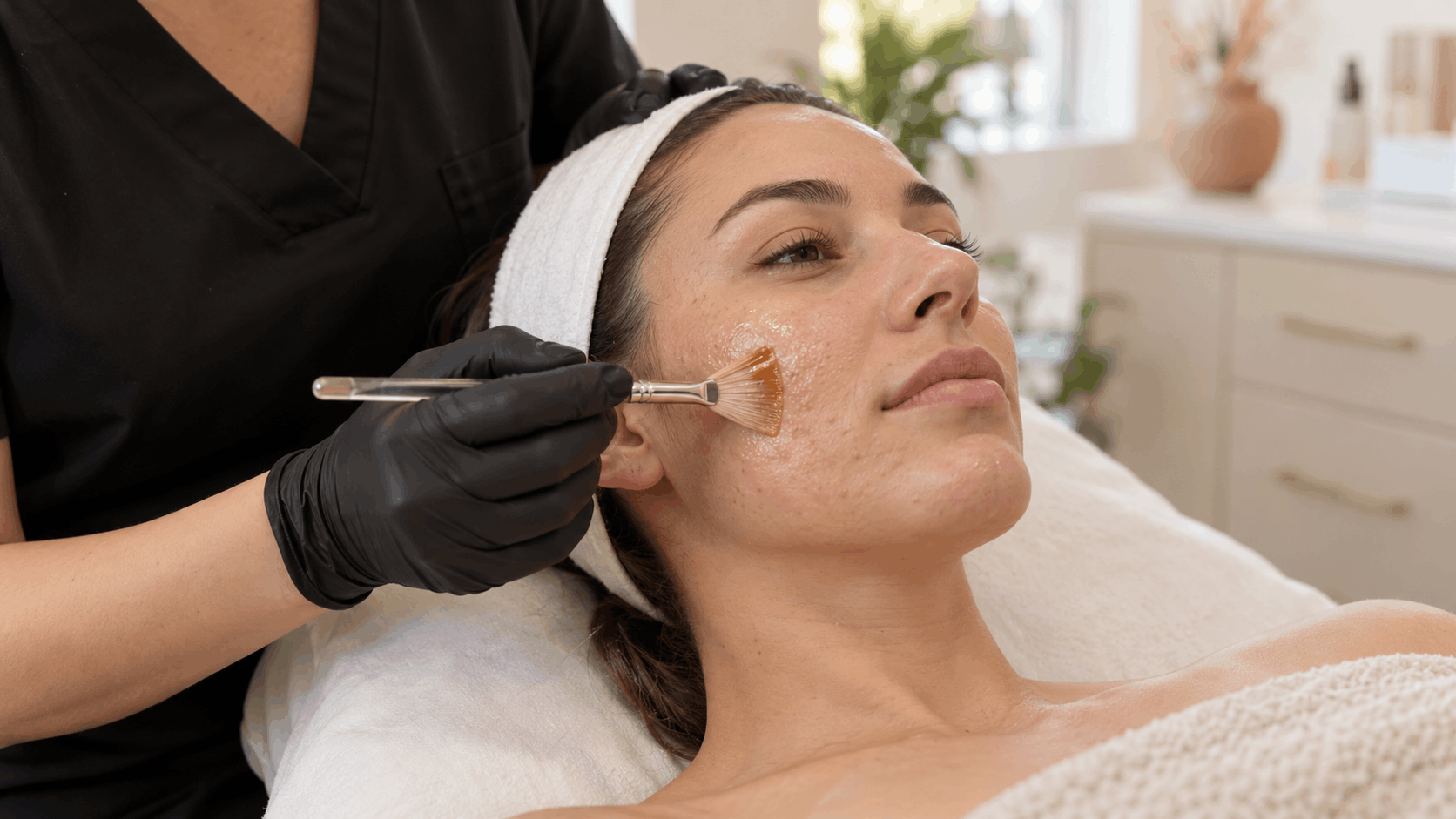
Ask five people how often to get a facial, and you may hear five completely different answers.
Once a month.
Before every special event.
Only when your skin starts misbehaving.
Whenever your calendar and bank account finally agree.
The most accurate answer is less catchy: facial frequency should depend on your skin type, current skin condition, treatment intensity, home routine, and goals.
A customized facial may help cleanse, exfoliate, hydrate, and support overall skin health, but facials are not interchangeable. A gentle hydrating treatment can often be repeated more frequently than an aggressive resurfacing procedure, and someone managing dryness may need a different schedule from someone focused on congestion or event-ready radiance.
Genesis MedSpa recommends its customized Signature Facial approximately every four to six weeks for ongoing maintenance. However, that schedule is a starting framework rather than a universal prescription for every treatment or patient.
The better question is not simply, “How often should everyone get a facial?”
It is “How often does my skin need this particular facial?”
Jump To:
- TL;DR – Quick Guide
- Detailed Breakdown
- Why Do Under-Eye Bags Form?
- Why Can't Eye Cream Fix Every Under-Eye Bag?
- Is It an Under-Eye Bag or a Tear-Trough Hollow?
- How Can Agnes RF Treat Under-Eye Bags?
- Is Agnes RF a Non-Surgical Alternative to Blepharoplasty?
- What If Hollowness Is Making the Bags Look Worse?
- Where Does PRP Filler Fit?
- Can Sculptra Help With Under-Eye Aging?
- Why Can Adding More Filler Sometimes Make Under-Eye Bags Worse?
- Can Lifestyle Changes Reduce Under-Eye Bags?
- How Do You Choose the Right Non-Surgical Treatment?
- When Is Surgery Still the Better Option?
- Key Takeaways
- FAQs
TL;DR – Quick Guide
Here is a practical starting point for deciding how often to get a facial:
- General maintenance: Approximately every four to six weeks may suit many people receiving a gentle, customized facial.
- Dry or dehydrated skin: A hydrating facial every four to six weeks may help, with timing adjusted if the skin is irritated or barrier-impaired.
- Dull skin: Monthly or seasonal treatments may support exfoliation and radiance, depending on sensitivity and home care.
- Oily or congested skin: Some patients may initially benefit from closer professional follow-up, but aggressive extraction or exfoliation should not be overdone.
- Sensitive skin: Longer intervals and gentler treatments may be appropriate, especially during irritation or active flare-ups.
- Event preparation: A familiar, low-downtime facial may be scheduled shortly before an event, while first-time or more intensive treatments deserve extra breathing room.
- Signature Facial: A customizable 60-minute option that Genesis MedSpa recommends every four to six weeks.
- Express Facial: A 30-minute cleansing, exfoliating, and hydrating treatment for convenient maintenance.
- Fire and Ice Facial: A resurfacing treatment for texture, fine lines, and radiance that should be scheduled according to tolerance and provider guidance.
- DiamondGlow Facial: A three-in-one treatment combining exfoliation, extraction, and serum infusion for hydration and smoother-looking skin.
Bottom line: how often to get a facial depends less on a rigid calendar and more on what the treatment does, how your skin responds, and what you are trying to improve.
Detailed Breakdown
Is Once a Month the Ideal Facial Schedule?
Monthly facials are often recommended because the skin continuously renews itself and many people find four-to-six-week appointments practical for maintenance.
Genesis MedSpa specifically recommends its Signature Facial every four to six weeks. The treatment includes cleansing, exfoliation, extractions, a mask, and hydration and can be customized for different concerns and skin types.
That does not mean every facial should automatically be repeated monthly.
The correct interval can change based on:
- Treatment strength
- Skin sensitivity
- Active acne or inflammation
- Dryness and barrier health
- Use of retinoids or exfoliating products
- Recent laser, peel, or injectable treatments
- Sun exposure
- Seasonal changes
- Desired result
- Provider instructions
A customized maintenance facial every four to six weeks may be reasonable.
An intensive resurfacing treatment every four weeks may be too much for some patients.
The treatment name matters less than what is actually being done to the skin.
How Often Should Dry or Dehydrated Skin Get a Facial?
Dry and dehydrated skin often benefits from gentle care focused on hydration, barrier support, and avoiding unnecessary irritation.
Dry skin generally lacks adequate oils, while dehydrated skin lacks water. Either condition can contribute to tightness, roughness, flaking, dullness, and more noticeable fine lines.
Genesis MedSpa’s treatment guidance for dry and dehydrated skin emphasizes customized options that restore moisture and support smoother, more comfortable skin. Its facial menu includes treatments designed around cleansing, hydration, exfoliation, and serum infusion.
A practical starting schedule may be:
- Every four to six weeks for maintenance
- Seasonally when dry weather worsens symptoms
- Before an event when the skin needs a hydration boost
- Less frequently if exfoliation causes irritation
More appointments are not automatically better.
If the skin barrier is inflamed, cracked, burning, or unusually reactive, exfoliation may need to be reduced or postponed. A facial should support compromised skin—not challenge it to a duel.
Home care remains essential between appointments.
Gentle cleansing, regular moisturizing, and daily sunscreen will influence results more than relying on one facial to carry the entire routine.
How Often Should Dull Skin Get a Facial?
Dull skin may result from dehydration, surface-cell buildup, uneven texture, sun exposure, aging, or a combination of factors.
Genesis MedSpa identifies dead-skin buildup, dehydration, environmental exposure, lifestyle factors, and aging among potential contributors to dull skin.
Someone with mild dullness may benefit from a facial every four to six weeks, especially when the treatment includes controlled exfoliation and hydration.
However, frequency should reflect the cause.
When surface buildup is dominant:
Periodic exfoliating facials may improve smoothness and radiance.
When dehydration is dominant:
Hydration and barrier care may matter more than stronger exfoliation.
When pigmentation or sun damage is dominant:
A conventional facial may offer temporary brightness but may not fully address the underlying discoloration.
When home care is overly aggressive:
Reducing acids, scrubs, or retinoids may help more than booking another resurfacing treatment.
The goal should be healthier-looking skin—not creating a temporary shine while the barrier quietly files a complaint.
How Often Should Oily or Congested Skin Get a Facial?
Oily skin can still become dehydrated, irritated, or over-exfoliated.
That is why “more oil” should not automatically lead to “more aggressive facial.”
Professional cleansing and extractions may help appropriate congestion, but repeated squeezing or overly frequent exfoliation can worsen irritation and potentially increase visible inflammation.
A provider may initially recommend closer follow-up when managing persistent congestion, then extend the interval as the skin improves. For other patients, a four-to-six-week schedule combined with consistent home care may be sufficient.
Factors that can influence the plan include:
- Type of congestion
- Presence of inflammatory acne
- Skin sensitivity
- Current prescription treatments
- Retinoid use
- Hormonal patterns
- Home cleansing habits
- Previous reactions to extraction or exfoliation
Facials can support an acne-care plan, but they do not replace medical diagnosis or treatment for moderate, severe, cystic, or scarring acne. The American Academy of Dermatology advises that different types of acne require different treatment approaches rather than a one-size-fits-all solution.
How Often Should Sensitive Skin Get a Facial?
Sensitive skin usually needs more restraint, not more enthusiasm.
People with rosacea, eczema, active irritation, allergies, or a damaged skin barrier may react poorly to heat, friction, strong exfoliating acids, fragrances, or aggressive extraction.
A gentler facial at longer intervals may be appropriate, while treatment should often be postponed during an active flare.
Before scheduling, tell the provider about:
- Burning or stinging
- Persistent redness
- Eczema or rosacea
- Known allergies
- Prescription skincare
- Recent procedures
- Previous facial reactions
- Pregnancy or breastfeeding when relevant
The AAD recommends asking cosmetic providers about their experience treating people with your skin type, tone, and age because individual responses vary.
“Suitable for all skin types” should still involve customization.
It should not mean performing exactly the same steps on every person.
How Often Should Mature Skin Get a Facial?
Mature skin may experience increasing dryness, uneven texture, fine lines, reduced elasticity, and slower recovery.
A regular hydrating and gently exfoliating facial may help maintain smoothness and radiance, but frequency should account for fragility and tolerance.
For many patients, every four to six weeks may be reasonable for a customized maintenance facial. Others may alternate facials with collagen-stimulating, laser, peel, or injectable treatments as part of a broader plan.
The important distinction is that a facial can support skin quality, but it cannot reproduce every benefit of deeper rejuvenation procedures.
A facial may help:
- Hydrate
- Exfoliate
- Improve temporary radiance
- Support smoother texture
- Maintain a professional skincare routine
It cannot fully correct:
- Significant laxity
- Deep wrinkles
- Major volume loss
- Advanced sun damage
- Deep acne scars
That is not a failure.
It simply means different tools have different jobs.
How Often Should You Get a Signature Facial?
Genesis MedSpa’s Signature Facial is a 60-minute customized treatment that includes deep cleansing, exfoliation, extractions, a soothing mask, and hydration.
Genesis recommends receiving it every four to six weeks for optimal maintenance. The practice describes it as appropriate for different skin types because the steps can be adjusted according to concerns such as dryness, congestion, dullness, and early aging.
This treatment may make sense for:
- Routine skin maintenance
- Hydration
- Surface buildup
- Mild congestion
- Dullness
- Preparing for a special event
- Supporting a consistent professional skincare plan
The four-to-six-week recommendation is the clearest answer to how often to get a facial when discussing this specific Genesis service.
Even then, your provider may adjust the schedule based on skin response and other procedures.
When Does an Express Facial Make More Sense?
The Express Facial is designed for people who want professional skin maintenance without committing to a full-length appointment.
Genesis describes it as a 30-minute treatment combining deep cleansing, gentle exfoliation, and hydration.
It may be useful when:
- Time is limited
- The skin needs a quick refresh
- You want maintenance between longer appointments
- You are preparing for a low-key event
- Intensive extraction or resurfacing is not the goal
Because it is shorter, an Express Facial is not necessarily weaker in every respect—but it is designed around efficiency rather than the full customization and extended steps of the Signature Facial.
Frequency should still depend on sensitivity and what products are used.
A short facial can still be too frequent if the skin is repeatedly exfoliated before it has recovered.
How Often Can You Get a Fire and Ice Facial?
The Fire and Ice Facial is a resurfacing-focused treatment that uses warming and cooling steps to improve radiance, fine lines, and texture. Genesis positions it as a results-driven option for patients seeking immediate glow and rejuvenation.
Because resurfacing is part of the treatment, the schedule should be more individualized than simply booking it whenever your skin looks bored.
Frequency may depend on:
- Strength of the products used
- Skin sensitivity
- Retinoid or acid use
- Recent sun exposure
- Other peels or lasers
- Treatment goal
- Previous response
It may be selected as an occasional event-ready facial, incorporated into a series, or alternated with gentler maintenance treatments.
The provider’s recommended interval should take priority over a general monthly rule.
Repeated resurfacing without adequate recovery can lead to irritation rather than better texture.
How Often Can You Get a DiamondGlow Facial?
The DiamondGlow Facial is a non-invasive three-in-one treatment that exfoliates, extracts, and infuses customized serums into the skin. Genesis describes it as improving hydration, texture, clarity, and radiance with no planned downtime.
DiamondGlow may appeal to patients focused on:
- Dry or dehydrated skin
- Dullness
- Congestion
- Rough texture
- Event preparation
- Consistent complexion maintenance
Because it combines physical exfoliation and extraction with serum infusion, the appropriate frequency still depends on the skin’s tolerance.
Some patients may use it as a monthly treatment.
Others may book it periodically, alternate it with a Signature Facial, or use it ahead of selected events.
The goal is to create a useful rhythm—not collect facials like loyalty stamps.
How Far Before an Event Should You Get a Facial?
For a familiar, gentle facial with no expected downtime, several days before an event may allow hydration and radiance to settle in while leaving room for any temporary redness.
A first-time facial deserves more caution.
Even gentle treatments can occasionally cause sensitivity, temporary redness, or an unexpected reaction to a product. The AAD recommends testing new skincare products because irritation and allergic reactions are possible even when a product appears suitable for a particular skin type.
A sensible event strategy is:
- Do not experiment with an aggressive treatment immediately before important photographs.
- Choose a facial you already know your skin tolerates.
- Tell the provider the exact date of the event.
- Avoid adding several new home products at the same time.
- Follow post-treatment sunscreen and skincare instructions.
A facial should make event preparation easier.
It should not become the event.
Can You Get Facials Too Often?
Yes.
Over-treatment can disrupt the skin barrier and contribute to:
- Dryness
- Redness
- Burning
- Sensitivity
- Flaking
- Breakouts
- Increased irritation
- Post-inflammatory discoloration in susceptible skin
This risk is higher when frequent facials are combined with strong at-home acids, scrubs, retinoids, peels, or other procedures.
Warning signs that the schedule may be too aggressive include persistent stinging, unusual tightness, increasing redness, or products that suddenly burn when they previously did not.
A treatment plan should be adjusted when the skin is struggling.
“Push through it” is gym advice—not universal skincare advice.
How Do You Build the Right Facial Schedule?
Start with three questions:
What is your skin doing now?
Dryness, sensitivity, congestion, dullness, and pigmentation require different approaches.
What result do you want?
Routine maintenance, acne support, hydration, event preparation, and advanced rejuvenation are not the same goal.
What else are you doing to your skin?
Prescription products, retinoids, chemical exfoliants, lasers, microneedling, injectables, and recent sun exposure can all affect timing.
Then build a schedule around response.
A practical plan may look like:
- Signature Facial every four to six weeks for general maintenance
- Express Facial when time is limited or between fuller treatments
- DiamondGlow periodically for exfoliation, extraction, and serum infusion
- Fire and Ice according to resurfacing tolerance and professional guidance
- Longer spacing during irritation, active skin disease, or recovery from another procedure
Genesis MedSpa’s customized approach is useful here because the answer to how often to get a facial should change when the skin changes.
Key Takeaways
- There is no single facial frequency that works for every skin type, treatment, and goal.
- A four-to-six-week schedule is a useful starting point for many gentle maintenance facials.
- Genesis MedSpa specifically recommends its Signature Facial every four to six weeks.
- Dry or dehydrated skin may benefit from regular hydration-focused facials, but active irritation calls for a gentler approach.
- Dull skin may improve with controlled exfoliation and hydration, although pigmentation or sun damage can require more targeted treatment.
- Oily skin should not automatically receive aggressive or unusually frequent exfoliation.
- Sensitive skin may require longer intervals, customized products, and postponement during active flare-ups.
- The Express Facial offers a 30-minute option for quick cleansing, exfoliation, and hydration.
- The Fire and Ice Facial is more resurfacing-focused, so scheduling should account for treatment intensity and skin tolerance.
- DiamondGlow combines exfoliation, extraction, and serum infusion and may be used for periodic or monthly maintenance in appropriate patients.
- Receiving facials too frequently can contribute to dryness, redness, sensitivity, and barrier disruption.
- Home cleansing, moisturizing, and daily sun protection remain essential between professional treatments.
- Genesis MedSpa can assess your skin type, current condition, and goals before recommending an appropriate facial and treatment interval.
FAQs
1. How often should you get a facial for general maintenance?
Many people can begin with a facial approximately every four to six weeks for general maintenance. Genesis MedSpa recommends this interval for its customized Signature Facial. The schedule should be adjusted according to treatment intensity, sensitivity, home skincare, and how the skin responds.
2. How often should you get a facial for dry skin?
Dry or dehydrated skin may benefit from a gentle hydrating facial every four to six weeks, although some patients need seasonal or less frequent treatment. Active irritation, cracking, or barrier damage may require postponing exfoliation and focusing first on gentle skincare or medical evaluation. A provider can determine whether the priority is hydration, exfoliation, or treatment of another underlying condition.
3. Can you get a facial every two weeks?
Some gentle treatments may be scheduled every two weeks as part of a specific professional plan, but that frequency is not appropriate for every facial or skin type. Repeated extraction, exfoliation, or resurfacing can irritate the skin when performed before it has recovered. Follow the interval recommended for the specific treatment rather than assuming all facials are safe on the same schedule.
4. Which Genesis MedSpa facial is best before an event?
A Signature, Express, or DiamondGlow Facial may be considered when the goal is refreshed, hydrated, event-ready skin, depending on the person’s needs and prior treatment experience. Fire and Ice may also provide radiance and resurfacing, but sensitivity and timing should be considered more carefully. Choose a treatment your skin already tolerates and tell the provider the exact event date.
5. How do I know if I am getting facials too often?
Persistent redness, burning, tightness, flaking, sensitivity, or worsening irritation may indicate that treatments or home exfoliation are too aggressive. The right answer to how often to get a facial should change when the skin shows signs of barrier stress. Pause unnecessary active products and discuss the reaction with the treating professional before scheduling another procedure.