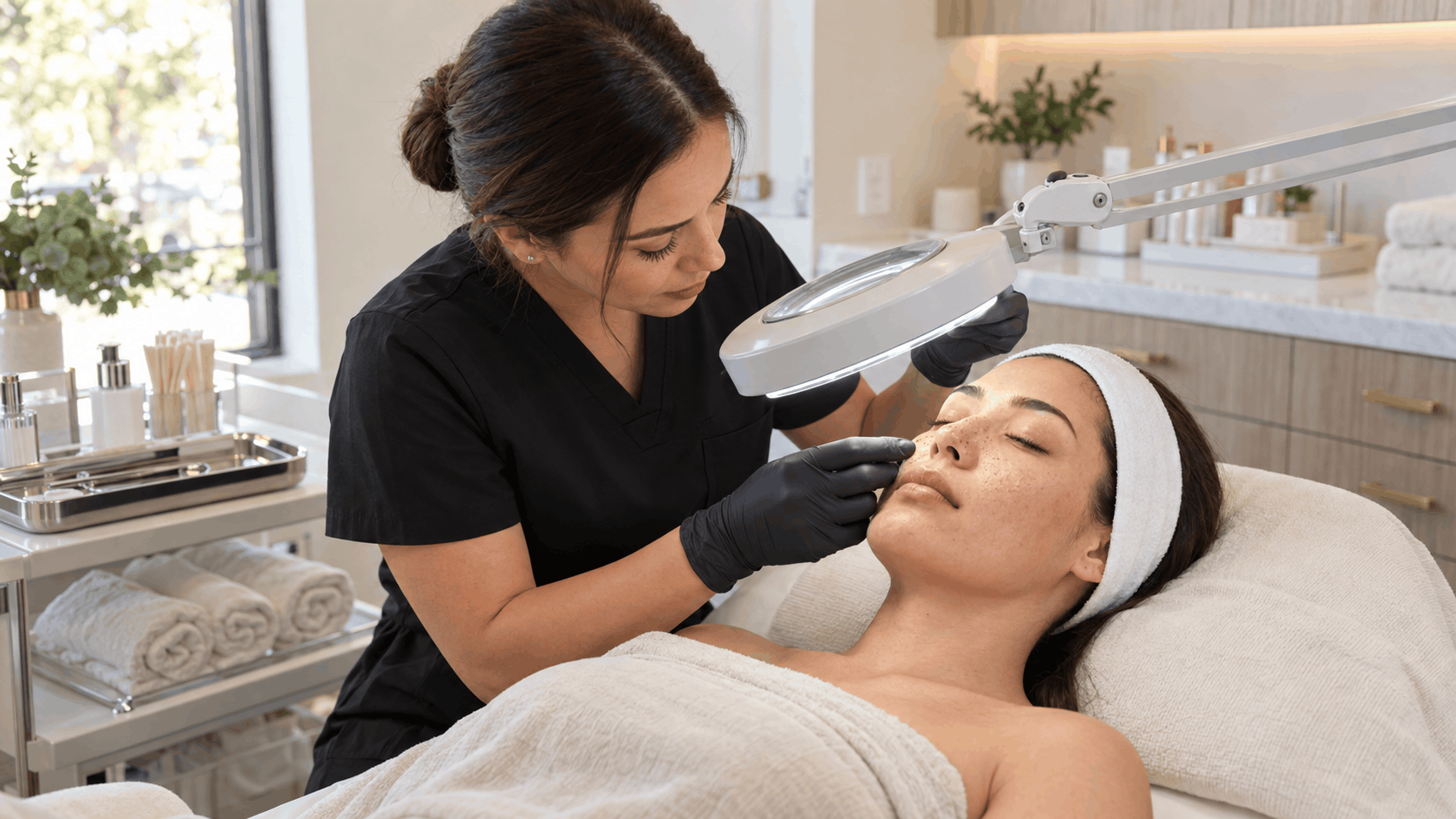
You finally have perfectly shaped brows, a smooth upper lip, and one less thing to worry about in your morning routine. But then comes the inevitable question: How long does facial waxing last before those little hairs start making a comeback?
Unlike shaving, which cuts hair at the skin’s surface, waxing removes hair from the root. That means you can typically enjoy smoother skin for longer without reaching for your tweezers every other morning.
For many people, facial waxing results last approximately 2–4 weeks before noticeable regrowth, although the timing varies by treatment area, individual hair growth, and how consistently you wax.
Some people notice fine hairs returning sooner, while others can comfortably wait four to six weeks between appointments.
The secret isn’t finding a magical way to stop hair growth forever. It’s understanding your natural growth cycle and scheduling touch-ups at the right time.
Let’s break down how long facial waxing lasts, what affects regrowth, and how to keep your skin comfortable between appointments.
Jump To:
- Detailed Breakdown
- How Does Facial Waxing Work?
- How Long Does Facial Waxing Last on Different Areas?
- Eyebrow Waxing: Approximately 3–4 Weeks
- Upper Lip Waxing: Approximately 2–4 Weeks
- Nose Waxing: Timing and Safety Matter
- Why Does Facial Hair Grow Back at Different Speeds?
- How Often Should You Schedule Facial Waxing?
- Does Facial Waxing Last Longer Than Shaving?
- Facial Waxing vs. Dermaplaning: What's the Difference?
- How Should You Prepare for Facial Waxing?
- How to Care for Your Skin After Facial Waxing
- Can Facial Waxing Make Dry Skin Worse?
- When Should You Wax Before a Special Event?
- How to Make Facial Waxing Results Last Longer
- Key Takeaways
- FAQs
TL;DR – Quick Guide
- Typical results: Facial waxing often provides approximately 2–4 weeks of smoother-looking skin before noticeable regrowth.
- Brow waxing: Many clients schedule shaping appointments every 3–4 weeks.
- Upper lip waxing: Touch-ups may be needed every 2–4 weeks, depending on hair growth.
- Nose waxing: Timing varies, and only appropriate visible hair should be removed.
- Best touch-up schedule: Usually every 3–6 weeks, adjusted for the area and individual growth.
- Before an event: Consider waxing 3–5 days beforehand, or earlier if you’re sensitive.
- Skin safety: Retinoids, recent exfoliation, sunburn, and irritation may increase the risk of skin injury.
- Long-term expectations: Waxing provides temporary hair removal, not permanent hair reduction.
Detailed Breakdown
How Does Facial Waxing Work?
Facial waxing removes unwanted hair by applying a suitable wax to the treatment area and lifting it away along with the hair.
Unlike shaving, which trims hair at the surface, waxing removes hair from within the follicle.
This allows more time before the growing hair becomes visible again.
Common facial waxing areas include:
- Eyebrows.
- Upper lip.
- Chin.
- Selected areas around the nose.
At Genesis MedSpa, the Lip, Brow & Nose Wax service offers options for maintaining a groomed appearance.
The treatment approach should be tailored to the area, skin sensitivity, and type of hair being removed.
Important: Waxing doesn’t permanently destroy the hair follicle, so regrowth is expected.
How Long Does Facial Waxing Last on Different Areas?
When asking how long does facial waxing last, the treatment area makes a difference.
Hair growth patterns vary across the face, and some areas become noticeable sooner than others.
| Treatment area | Common touch-up interval | What to expect |
| Eyebrows | Every 3–4 weeks | New hairs may affect brow shape before the next appointment |
| Upper lip | Every 2–4 weeks | Fine regrowth may become noticeable relatively quickly |
| Chin | Every 2–4 weeks | Coarser hairs may be more visible as they return |
| Visible nose hair | Varies | Maintenance depends on individual growth and safe treatment technique |
These intervals are general planning estimates, not guaranteed regrowth timelines.
Eyebrow Waxing: Approximately 3–4 Weeks
Brow waxing helps create a more defined shape by removing hairs outside your desired brow line.
For many people, an appointment every three to four weeks is enough to maintain that shape.
However, small hairs may appear earlier.
If your brows grow quickly, your provider may recommend a shorter maintenance interval.
Avoid repeatedly tweezing new growth between appointments if you’re trying to establish a consistent brow shape.
Upper Lip Waxing: Approximately 2–4 Weeks
Upper lip hair can become noticeable quickly, especially when the hair is darker or coarser.
Many people schedule touch-ups every two to four weeks.
However, some clients may prefer a longer interval to allow enough hair to grow for effective removal.
Waxing too frequently can irritate the skin without improving the result.
Nose Waxing: Timing and Safety Matter
Visible hair near the nostrils may be addressed through carefully selected grooming techniques.
However, nose hair plays a protective role by helping filter particles from inhaled air.
Removing hair deep inside the nostrils can increase the risk of irritation, folliculitis, or infection.
If you’re considering nose waxing, ask your provider exactly which hairs will be removed and whether trimming would be a safer alternative.
Why Does Facial Hair Grow Back at Different Speeds?
If your friend can go a month between appointments but you’re noticing regrowth after two weeks, don’t assume your waxing treatment failed.
Several factors influence hair growth.
1. Your Natural Hair Growth Cycle
Hair grows through different phases:
- Anagen: Active growth.
- Catagen: Transition phase.
- Telogen: Resting phase.
Not every hair is in the same phase at the same time.
That means some hairs may become visible shortly after waxing because they weren’t long enough to be removed during the appointment.
This is normal.
2. Hormonal Influences
Hormones can affect facial hair growth, particularly around the upper lip and chin.
Changes related to age, certain medications, or hormonal conditions may influence hair thickness and growth patterns.
If you experience sudden or significant increases in facial hair, consider speaking with a healthcare professional.
3. Hair Thickness and Color
Dark, coarse hairs may become noticeable sooner than fine, light-colored hairs.
This doesn’t necessarily mean they’re growing faster.
They may simply be easier to see.
4. Your Previous Hair Removal Habits
Shaving, tweezing, and waxing remove hair in different ways.
Switching between methods can make regrowth appear less uniform.
Consistent waxing may help you establish a more predictable maintenance schedule, although it doesn’t guarantee thinner hair or permanent reduction.
How Often Should You Schedule Facial Waxing?
A practical starting point is scheduling facial waxing every three to four weeks.
From there, adjust based on how quickly hair returns and whether enough growth is present for effective removal.
Your ideal schedule depends on:
- Treatment area.
- Hair thickness.
- Hair growth rate.
- Skin sensitivity.
- Previous waxing experience.
- Personal grooming preferences.
For some clients, appointments every two to three weeks may be appropriate.
Others may prefer waiting four to six weeks.
You can explore Genesis MedSpa’s Waxing Services to learn about professional hair removal options.
Does Facial Waxing Last Longer Than Shaving?
Generally, yes.
Shaving cuts hair at the skin’s surface, so stubble may become noticeable within a few days.
Waxing removes hair from the root, which usually provides a longer interval before visible regrowth.
Here’s a simple comparison:
| Method | How it removes hair | Typical maintenance |
| Waxing | Removes hair from the root | Often every 2–4 weeks |
| Shaving | Cuts hair at the skin surface | Often every few days |
| Tweezing | Removes individual hairs from the root | As individual hairs return |
| Dermaplaning | Removes surface hair and exfoliates | Depends on hair regrowth and skin needs |
| Laser hair reduction | Targets follicles using light energy | Requires a treatment series; results vary |
Waxing may be convenient if you want to spend less time on daily grooming.
However, it can also cause more irritation than shaving for certain skin types.
The best method depends on your goals and skin tolerance.
Facial Waxing vs. Dermaplaning: What’s the Difference?
Waxing and dermaplaning are sometimes confused because both can leave the face feeling smoother.
However, they serve different purposes.
Dermaplane treatments use a specialized blade to remove surface skin cells and fine facial hair.
Dermaplaning doesn’t remove hair from the root.
Waxing, on the other hand, removes hair from the follicle and is often used for targeted areas such as the brows and upper lip.
Choose Waxing When:
- You want longer-lasting removal of selected facial hairs.
- You’re maintaining a defined eyebrow shape.
- Your skin can safely tolerate waxing.
- You prefer less frequent hair removal.
Consider Dermaplaning When:
- You’re primarily concerned about fine facial hair.
- You also want surface exfoliation.
- You prefer a treatment that doesn’t pull hair from the root.
- Your provider considers it suitable for your skin.
Neither method is automatically better.
You can explore other options through the Facials & Lasers Services page.
How Should You Prepare for Facial Waxing?
Preparation matters, especially because facial skin can be sensitive.
A few simple steps can help reduce the risk of irritation.
Review Your Skincare Products
Some skincare ingredients can make the skin more vulnerable to injury during waxing.
These include:
- Prescription retinoids.
- Over-the-counter retinol.
- Exfoliating acids.
- Certain acne treatments.
- Recently used strong exfoliating products.
Retinoids and exfoliating products can increase the risk of irritation or skin lifting during waxing, depending on the product and your skin’s condition.
Never stop prescription medication without guidance from the prescribing clinician.
Tell your waxing professional about all relevant medications and skincare products before treatment.
Avoid Waxing Irritated Skin
Waxing should generally be postponed if the treatment area has:
- Sunburn.
- Open wounds.
- Active irritation.
- A rash.
- Significant peeling.
- An active infection.
If your skin is already compromised, removing hair with wax may worsen the problem.
For additional guidance, read When to Reschedule Your Facial Treatment, which covers situations when postponing a skin treatment may be appropriate.
Don’t Wax Too Soon After Other Treatments
Recent chemical peels, laser procedures, or aggressive exfoliation may increase skin sensitivity.
Ask your provider how much time should separate waxing from other facial services.
There is no single safe waiting period for every treatment combination.
How to Care for Your Skin After Facial Waxing
The first 24–48 hours after waxing are important for skin comfort.
Temporary redness, tenderness, or small bumps can occur.
Your provider may recommend:
- Keeping the area clean: Use gentle cleansing products.
- Avoiding harsh exfoliation: Skip scrubs and strong active ingredients until the skin settles.
- Minimizing heat exposure: Avoid excessive heat if the treated area feels sensitive.
- Using appropriate moisturizer: Choose a gentle, fragrance-free product if recommended.
- Wearing sunscreen: Protect exposed skin from UV radiation.
- Avoiding picking: Don’t squeeze or scratch irritated follicles.
If you experience severe pain, spreading redness, significant swelling, or signs of infection, seek medical advice.
Can Facial Waxing Make Dry Skin Worse?
Waxing can temporarily irritate the skin, particularly if the protective barrier is already compromised.
People with dry or dehydrated skin may experience more tightness, redness, or discomfort after treatment.
However, waxing doesn’t automatically cause chronic dry skin.
The important consideration is whether your skin is healthy enough to tolerate the procedure.
If you regularly experience flaking, tightness, or sensitivity, explore Dry or Dehydrated Skin.
Your provider may recommend improving skin comfort before scheduling waxing.
When Should You Wax Before a Special Event?
Planning a wedding, holiday party, photoshoot, or important celebration?
Timing your appointment can help reduce the chance of visible redness during the event.
For many people, scheduling facial waxing approximately 3–5 days beforehand is a practical starting point.
If you’ve never waxed the area before or have reactive skin, consider booking earlier.
Avoid experimenting with facial waxing for the first time immediately before an important occasion.
For more event-planning advice, read Preparing Your Skin for a Big Event.
How to Make Facial Waxing Results Last Longer
You can’t completely control how quickly your hair grows, but you can improve your maintenance routine.
Try these habits:
- Schedule appointments consistently.
- Avoid shaving between waxing sessions if you’re maintaining a waxing routine.
- Don’t pick at ingrown hairs.
- Follow appropriate post-waxing skincare instructions.
- Keep the skin moisturized.
- Avoid waxing before hair is long enough for effective removal.
- Tell your provider if you develop recurring irritation or ingrown hairs.
Remember that the goal isn’t to prevent every single hair from returning.
It’s to maintain smooth-looking skin with a schedule that works for your lifestyle.
Key Takeaways
- How long does facial waxing last? Many people experience approximately 2–4 weeks of smoother-looking skin before noticeable regrowth.
- Treatment areas vary: Brow, lip, chin, and nose hair may require different maintenance schedules.
- Waxing lasts longer than shaving: Removing hair from the root generally delays visible regrowth.
- Hair growth is individual: Hormones, hair thickness, and natural growth cycles affect timing.
- Consistency helps with planning: Regular appointments can make grooming more predictable, but waxing isn’t permanent.
- Skin preparation matters: Retinoids, exfoliating products, and recent procedures may increase irritation risks.
- Aftercare supports comfort: Gentle cleansing, moisturizing, and sun protection are important after treatment.
- Book ahead of special events: Allow several days for temporary redness or sensitivity to settle.
Ready to simplify your facial hair maintenance routine?
At Genesis MedSpa, you can explore professional waxing services and discuss the best appointment schedule for your hair growth and skin type.
Whether you’re maintaining your brow shape or addressing unwanted upper lip hair, a personalized approach can help you achieve a polished appearance without unnecessary irritation.
Because smooth skin is great—but knowing when to book your next appointment is even better.
FAQs
1. How long does facial waxing last on the upper lip?
Upper lip waxing often provides approximately two to four weeks of smoother-looking skin before noticeable regrowth. The exact timeline depends on hair growth rate, thickness, and individual hormonal factors. Some people may need touch-ups sooner, while others can comfortably wait longer.
2. How often should I get my eyebrows waxed?
Many people schedule eyebrow waxing every three to four weeks to maintain their preferred shape. However, the ideal interval depends on how quickly new hairs become visible. Your waxing professional can recommend a schedule that balances grooming preferences with skin comfort.
3. Does facial hair grow back thicker after waxing?
Waxing does not generally cause facial hair to grow back thicker because it doesn’t increase the number of hair follicles. Regrowth may feel or appear different depending on the hair’s growth stage and natural characteristics. Hormonal changes can influence facial hair thickness independently of waxing.
4. Can I wax my face if I use retinol or tretinoin?
Retinol and prescription tretinoin can increase the risk of skin irritation or lifting during facial waxing. You should tell your waxing professional about these products and follow guidance from the prescribing clinician before scheduling treatment. A different hair removal method may be safer if your skin is particularly sensitive.
5. How many days before a special event should I get facial waxing?
Scheduling facial waxing approximately three to five days before an event is a reasonable starting point for many clients. This allows time for temporary redness or sensitivity to settle before photographs or celebrations. If you’re new to waxing or have reactive skin, consider booking earlier.