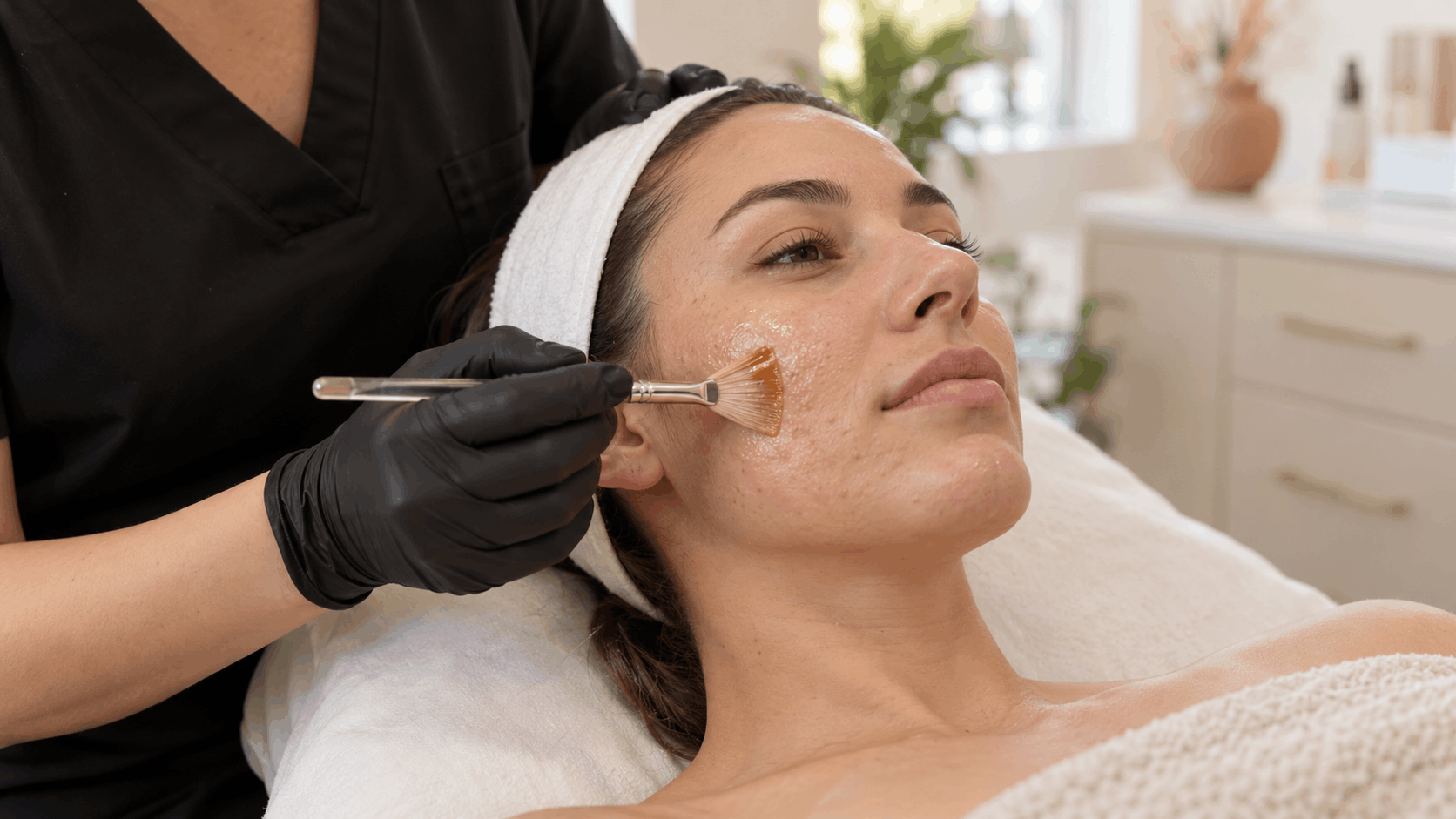
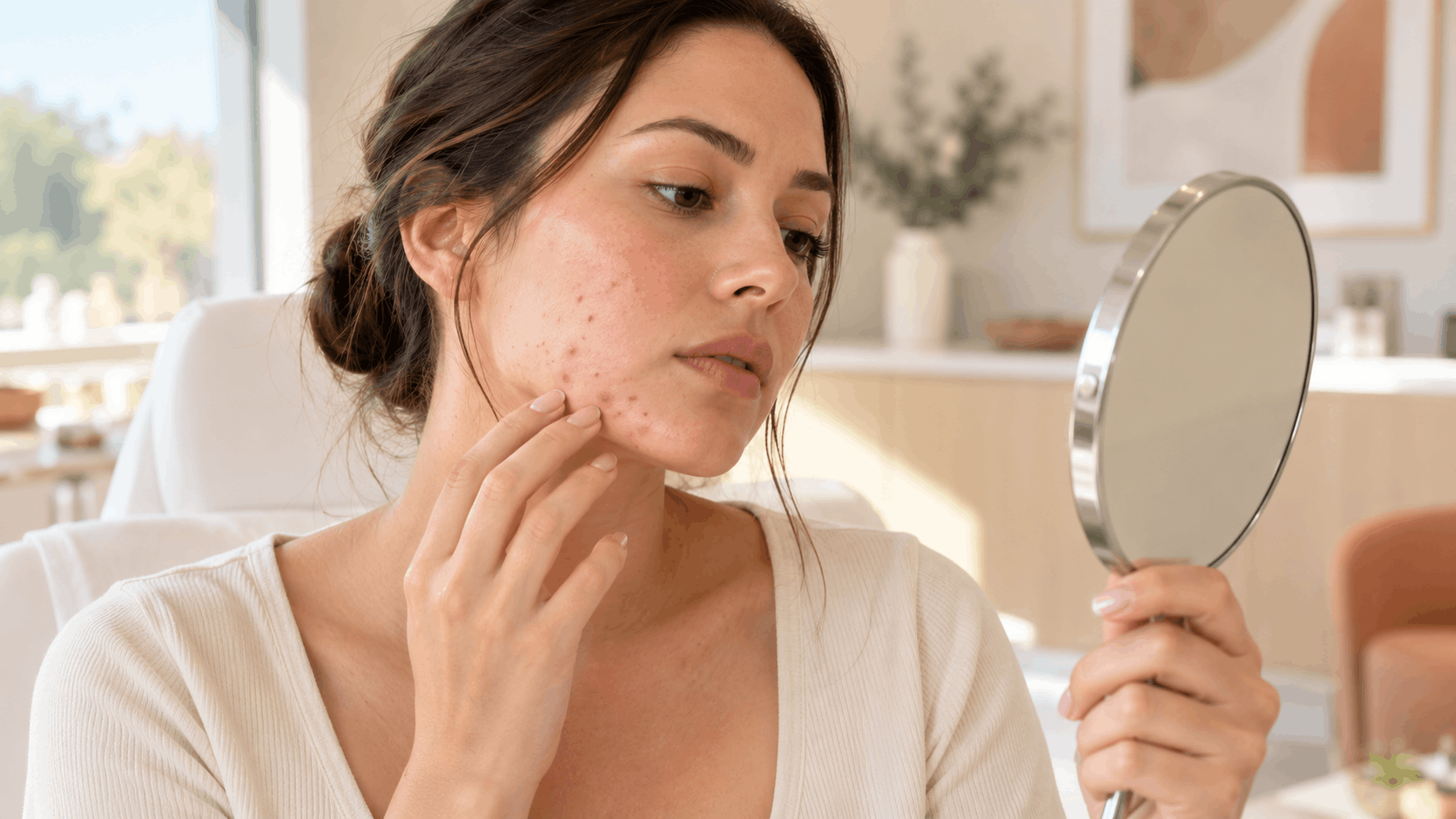
Chemical peels and laser treatments can both improve pigmentation, rough texture, acne-related concerns, and visible signs of aging.
Naturally, the next question is: Should you get a chemical peel before or after laser treatment?
The honest answer is that there is no universal sequence.
A peel may be used before certain laser treatments as part of a professionally designed combination plan. In other cases, the laser should come first, followed by a peel only after the skin has fully recovered. Some patients should not combine the procedures within the same treatment cycle at all.
Why the caution?
Both treatments intentionally stimulate skin renewal. Chemical peels use exfoliating solutions to remove or loosen damaged surface layers, while lasers use targeted energy to address pigment, texture, scars, or deeper tissue. Layering them too closely can increase irritation, prolong healing, and raise the risk of unwanted pigmentation or other complications.
Genesis MedSpa offers several facial and laser services, including VI Peel formulations, CO2 laser resurfacing, and Pico Laser. The safest sequence depends on which specific peel and laser are being considered—not simply which appointment is available first.
Jump To:
- TL;DR – Quick Guide
- Detailed Breakdown
- Why Do Under-Eye Bags Form?
- Why Can't Eye Cream Fix Every Under-Eye Bag?
- Is It an Under-Eye Bag or a Tear-Trough Hollow?
- How Can Agnes RF Treat Under-Eye Bags?
- Is Agnes RF a Non-Surgical Alternative to Blepharoplasty?
- What If Hollowness Is Making the Bags Look Worse?
- Where Does PRP Filler Fit?
- Can Sculptra Help With Under-Eye Aging?
- Why Can Adding More Filler Sometimes Make Under-Eye Bags Worse?
- Can Lifestyle Changes Reduce Under-Eye Bags?
- How Do You Choose the Right Non-Surgical Treatment?
- When Is Surgery Still the Better Option?
- Key Takeaways
- FAQs
TL;DR – Quick Guide
Here is the quick answer to chemical peel before or after laser treatment:
- There is no universal order: The right sequence depends on the peel depth, laser type, skin condition, tone, and treatment goal.
- Do not stack treatments yourself: Both procedures can temporarily weaken or disrupt the skin barrier.
- A peel may come first: In selected professional protocols, exfoliation may be used before certain light or laser treatments.
- A laser may come first: For deeper resurfacing, the skin generally needs to heal completely before another exfoliating treatment is considered.
- CO2 laser requires more caution: Ablative or fractional CO2 resurfacing creates a more substantial healing response than a mild peel.
- Pico Laser is different: Pico treatments target pigment with ultra-short pulses and may require less recovery, but timing still depends on settings and skin response.
- Hyperpigmentation risk matters: Darker skin tones, melasma, recent tanning, and previous pigment reactions require careful planning.
- Wait until recovery is complete: Persistent redness, peeling, tenderness, or sensitivity means the skin is not ready for another procedure.
- Sun protection is essential: UV exposure around either treatment can increase irritation and pigmentation risk.
Bottom line: Whether to schedule a chemical peel before or after laser treatment should be decided as part of one coordinated plan—not as two unrelated appointments.
Detailed Breakdown
How Do Chemical Peels and Lasers Differ?
Chemical peels and lasers may address similar concerns, but they do so differently.
A chemical peel applies a controlled solution to exfoliate selected layers of skin. The American Academy of Dermatology notes that peels can improve uneven color, roughness, fine lines, and certain types of acne, with recovery varying according to peel depth.
Laser treatments use focused energy.
Some lasers primarily target pigment, while resurfacing lasers create controlled tissue injury to remove damaged skin and stimulate remodeling. The American Society for Dermatologic Surgery identifies CO2 as a resurfacing laser used for concerns such as wrinkles and scars, with possible complications including swelling, burning, pigment changes, infection, and scarring.
That distinction affects timing.
A mild peel followed by a gentle pigment-focused laser is not the same combination as a medical-grade peel scheduled next to ablative CO2 resurfacing.
Can You Get a Chemical Peel Before Laser Treatment?
Sometimes—but only when the provider has deliberately designed the sequence.
The manufacturer of VI Peel describes professional combination protocols in which VI Peel may be paired with certain laser or light treatments. It states that the appropriate approach depends on the laser technology and the patient’s skin tone.
A peel before laser may be considered to:
- Remove accumulated surface cells
- Improve overall tone and texture
- Begin addressing superficial pigmentation
- Prepare the skin within a staged rejuvenation plan
- Complement a laser targeting a different depth or concern
However, “a peel first” does not mean receiving an aggressive peel immediately before every laser.
Genesis MedSpa describes VI Peel as a medical-grade treatment that causes visible peeling during the following days, with smoother and clearer skin emerging over approximately one to two weeks. The practice also instructs patients to avoid retinoids, exfoliating acids, and excessive sun exposure before treatment.
The skin should not still be actively peeling, inflamed, or unusually sensitive when another procedure is performed unless the combination is part of a specific, supervised protocol.
Can You Get a Chemical Peel After Laser Treatment?
Potentially, but the skin must recover first.
Laser-treated skin may experience redness, swelling, sensitivity, crusting, peeling, or temporary pigment changes depending on the technology and settings. Applying an exfoliating peel before recovery is complete can place additional stress on an already disrupted barrier.
This is especially important after ablative resurfacing.
The American Society for Dermatologic Surgery explains that laser resurfacing removes layers of skin and requires wound-style aftercare while new skin develops.
A chemical peel after laser may eventually be considered to:
- Address remaining superficial discoloration
- Support ongoing texture improvement
- Treat acne or congestion after recovery
- Maintain results
- Target a concern the laser did not fully address
But the correct waiting period is not one universal number.
It depends on:
- Laser type
- Treatment depth and settings
- Area treated
- Speed of healing
- Residual redness
- Skin tone
- Pigmentation history
- Peel formulation
- Other medications or skincare products
The skin—not the calendar—determines when recovery is complete.
How Long Should You Wait Between Treatments?
A provider may recommend anything from several weeks to considerably longer depending on the procedures involved.
Genesis MedSpa’s VI Peel page describes visible peeling around days three through five and more complete surface improvement within one to two weeks. It also notes that treatment frequency varies and that peel series are spaced several weeks apart according to the concern.
That does not establish an automatic laser interval.
The skin may look normal on the surface while deeper remodeling is still underway. More intensive lasers can require substantially longer recovery and more conservative treatment spacing.
Do not schedule the next procedure while the skin still has:
- Active peeling
- Persistent redness
- Swelling
- Tenderness
- Burning or stinging
- Crusting
- Open areas
- Unusual dryness
- Increased sensitivity
- New darkening or lightening
A fully personalized answer to chemical peel before or after laser requires knowing exactly which peel, which laser, and which settings are planned.
Why Does CO2 Laser Require More Careful Timing?
CO2 laser resurfacing is a more intensive treatment than a conventional maintenance facial or mild peel.
CO2 technology uses laser energy to create controlled columns of injury, remove damaged tissue, and stimulate collagen remodeling. Genesis MedSpa uses it for concerns such as wrinkles, acne scars, sun damage, pigmentation, and uneven texture.
Because CO2 treatment initiates a meaningful healing response, adding a chemical peel too soon can increase irritation and complicate recovery.
After CO2 laser, the priority is typically:
- Protecting the treated skin
- Following cleansing and ointment instructions
- Avoiding picking or premature exfoliation
- Minimizing UV exposure
- Waiting for barrier recovery
- Reintroducing active skincare only as directed
A peel may later become part of a maintenance or pigmentation plan, but it should not be treated as a casual add-on during early CO2 recovery.
What About Pico Laser and Chemical Peels?
Pico Laser works differently from CO2 resurfacing.
It delivers ultra-short picosecond pulses designed to target pigment and stimulate selected rejuvenation responses. Genesis MedSpa uses Pico Laser for pigmentation, sun damage, acne scars, fine lines, and uneven skin tone.
Pico treatment may involve less surface disruption than ablative CO2 laser, depending on the applicator, energy settings, and treatment goal.
That can make peel-and-laser combination planning more flexible—but not automatic.
A provider still needs to consider:
- Whether the pigment is melasma, sun damage, or another condition
- Skin tone and risk of post-inflammatory hyperpigmentation
- How aggressively the Pico treatment is delivered
- Whether the peel is superficial or medium-depth
- Previous reactions to either treatment
- Current sensitivity and barrier health
For pigmentation, more treatment is not always better.
Overheating, over-exfoliating, or repeatedly inflaming pigment-prone skin can sometimes make discoloration harder to manage.
Which VI Peel Is Appropriate?
Genesis MedSpa offers multiple VI Peel formulations because acne, pigmentation, and general rejuvenation do not always require the same approach.
VI Peel
The standard VI Peel is positioned for acne, fine lines, hyperpigmentation, sun damage, and uneven texture. Genesis describes it as a medical-grade peel with peeling and flaking usually developing during the following days.
VI Peel Precision Plus
VI Peel Precision Plus is designed more specifically around stubborn pigmentation, dark spots, melasma, and sun damage.
It may be considered within a pigmentation plan involving laser treatment, but melasma requires particular caution because heat and inflammation can trigger recurrence or worsening in some patients.
VI Peel Purify
VI Peel Purify focuses more heavily on acne, breakouts, congestion, and acne-related concerns.
It may be selected before or after a laser series when acne management is part of the overall goal, but it should not be applied to skin that has not recovered from laser treatment.
The correct formulation should be based on the diagnosis, not whichever peel sounds strongest.
Does Skin Tone Affect the Sequence?
Yes.
All skin tones can experience irritation and pigment changes, but people with more melanin can have a greater risk of post-inflammatory hyperpigmentation after procedures that inflame or injure the skin.
The AAD states that chemical peels can be safely performed in skin of color when the treating professional has appropriate experience. Without that expertise, lasting pigment problems can occur.
Treatment planning may include:
- More conservative settings
- Skin preparation before treatment
- Longer spacing between procedures
- Strict sun protection
- Avoiding treatment during active tanning
- Adjusting peel strength
- Choosing a different laser or treatment modality
- Monitoring pigment response before continuing a series
This is particularly important when treating uneven skin tone and hyperpigmentation. Genesis MedSpa offers multiple options because pigmentation depth, cause, and skin tone can change which treatment is most appropriate.
What Can Go Wrong When Treatments Are Too Close Together?
Scheduling a peel and laser too close together can increase the likelihood of:
- Excessive redness
- Prolonged sensitivity
- Barrier disruption
- Delayed healing
- Crusting
- Infection
- Post-inflammatory hyperpigmentation
- Hypopigmentation
- Scarring
- An unpredictable treatment response
These complications are not guaranteed, but they are serious enough to justify conservative planning.
A procedure should not be judged by how much peeling, redness, or swelling it creates.
The goal is controlled improvement—not winning a downtime competition.
How Should You Prepare for a Combined Treatment Plan?
Tell the provider about everything currently affecting your skin.
That includes:
- Retinoids
- Exfoliating acids
- Acne medication
- Recent tanning or sunburn
- Previous lasers or peels
- History of cold sores
- Melasma
- Keloid or abnormal scarring
- Pregnancy or breastfeeding
- Prescription medication
- Recent waxing
- Active infection or rash
- Previous pigment changes after treatment
Genesis MedSpa advises avoiding retinoids, exfoliating acids, and excessive sun exposure for several days before VI Peel.
After treatment, use only the products approved by the treating provider.
The VI Peel manufacturer advises avoiding rubbing or pulling peeling skin and notes that active dryness or flaking can continue beyond the most visible peeling period.
Do not speed up recovery with scrubs, exfoliating brushes, or extra acids.
Skin does not award bonus points for finishing the peeling phase early.
So, Should the Peel or Laser Come First?
Here is the most practical answer:
A peel may come first when a provider wants to address surface buildup or pigmentation before a compatible light or laser treatment.
A laser may come first when the deeper or more significant concern is the priority and the peel will be used later for maintenance or residual discoloration.
The treatments may be separated substantially when CO2 resurfacing, sensitive skin, melasma, darker skin tones, or previous pigment reactions increase risk.
One treatment may be enough when combining procedures would add irritation without meaningful benefit.
At Genesis MedSpa, the peel and laser options can be evaluated within one plan. That matters because the safest answer to chemical peel before or after laser is easier to determine when one provider understands the full treatment history and intended sequence.
Key Takeaways
- There is no universal answer to whether you should get a chemical peel before or after laser treatment.
- The correct sequence depends on peel depth, laser technology, settings, skin tone, diagnosis, healing status, and pigmentation risk.
- Chemical peels exfoliate selected skin layers, while lasers use targeted energy to treat pigment, texture, scars, or deeper tissue.
- A professionally planned peel may sometimes be used before certain light or laser treatments.
- Chemical peels should not be applied to skin that is still red, peeling, tender, crusted, or otherwise recovering from laser treatment.
- CO2 laser requires especially careful spacing because it creates a more substantial resurfacing and healing response.
- Pico Laser may involve less surface recovery than CO2 treatment, but its timing still depends on settings, pigment type, and skin response.
- VI Peel targets general tone, texture, acne, and pigmentation concerns.
- VI Peel Precision Plus focuses more specifically on stubborn pigmentation, melasma, dark spots, and sun damage.
- VI Peel Purify is designed around acne, breakouts, congestion, and acne-related concerns.
- Skin of color and melasma-prone skin may require conservative treatment settings and longer intervals to reduce pigment complications.
- Combining treatments too closely can increase irritation, delayed healing, unwanted pigmentation, infection, or scarring.
- Daily sun protection and treatment-specific aftercare are essential before and after both peels and lasers.
- Genesis MedSpa can create a coordinated sequence based on the specific peel, laser, skin concern, and recovery needs.
FAQs
1. Is it better to get a chemical peel before or after laser treatment?
There is no universally better order because the correct sequence depends on the peel formulation, laser type, skin tone, and treatment goal. A peel may be used first in selected professional combination protocols, while more intensive laser resurfacing usually requires complete healing before a peel is considered. Your provider should plan both procedures together rather than treating them as unrelated appointments.
2. How long should I wait between a chemical peel and laser treatment?
The waiting period can range from several weeks to longer depending on treatment depth and how the skin heals. Do not proceed while redness, peeling, tenderness, crusting, burning, or abnormal pigmentation remains. A provider must evaluate the skin and the exact treatments before giving a safe interval.
3. Can I get a VI Peel after CO2 laser resurfacing?
A VI Peel may eventually be considered after CO2 resurfacing, but not until the skin barrier has fully recovered and the treating provider approves it. CO2 laser removes or disrupts damaged tissue and initiates a deeper healing response than a mild facial treatment. Applying a peel too soon could increase irritation, delay healing, and raise the risk of pigment changes or scarring.
4. Can VI Peel Precision Plus be combined with Pico Laser?
The treatments may be included in a professionally supervised pigmentation plan because they address pigment through different mechanisms. Their order and spacing should depend on the type of pigmentation, skin tone, Pico settings, melasma history, and response to each procedure. Combining them does not guarantee faster results and may increase irritation when scheduled too aggressively.
5. Who should be especially cautious when combining peels and lasers?
People with melasma, darker skin tones, recent tanning, active irritation, previous pigment complications, abnormal scarring, or certain medical conditions need particularly careful planning. The answer to chemical peel before or after laser may involve gentler settings, longer spacing, skin preparation, or choosing only one procedure. A qualified provider should review medical history, skincare products, and previous treatment responses before proceeding.