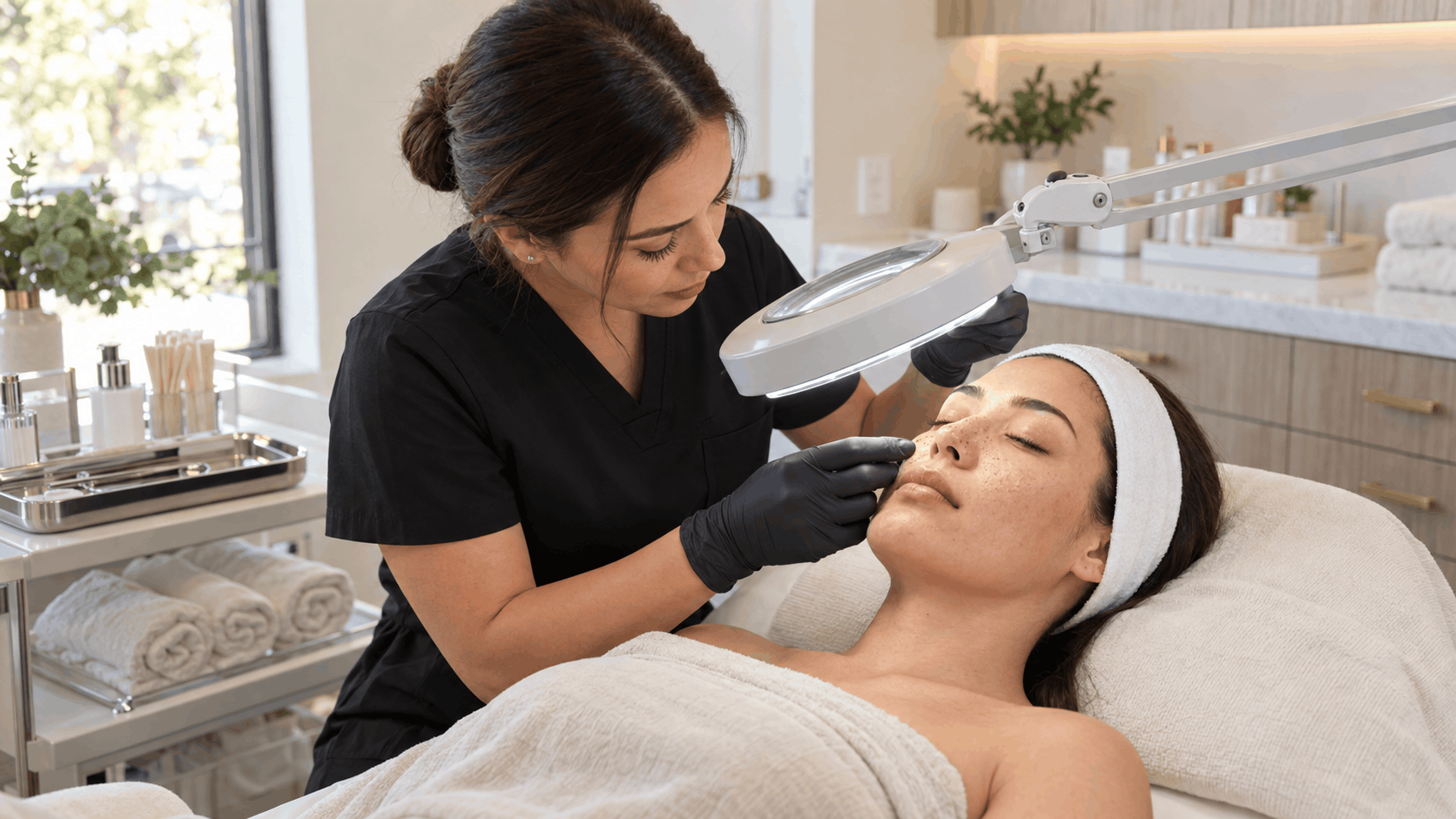
Acne may eventually clear up, but the marks it leaves behind can feel like an unwanted souvenir. Dark spots, red patches, and uneven texture can linger long after your last breakout, making it difficult to achieve the smooth, even-looking complexion you want.
That’s where BioRePeel for acne scars comes into the conversation.
This professional chemical peel is designed to exfoliate and refresh the skin, potentially improving certain types of post-acne discoloration and superficial texture concerns. But here’s the important distinction: not every mark left behind by acne is actually a scar, and not every scar responds to the same treatment.
BioRePeel may be more helpful for post-acne discoloration and mild surface irregularities than for deep, indented acne scars.
Understanding the difference can save you time, money, and unrealistic expectations.
Let’s break down which acne marks BioRePeel may help improve, where its limitations begin, and how to determine whether it’s the right treatment for your skin.
Jump To:
- Detailed Breakdown
- What Is BioRePeel and How Does It Work?
- Acne Marks vs. Acne Scars: Why the Difference Matters
- Which Types of Acne Marks May Respond Best to BioRePeel?
- Can BioRePeel Help With Uneven Skin Tone After Acne?
- How Many BioRePeel Sessions Do You Need for Acne Marks?
- BioRePeel vs. Other Acne Scar Treatments
- How to Prepare for a BioRePeel Treatment
- What Should You Expect After BioRePeel?
- Who Is a Good Candidate for BioRePeel for Acne Scars?
- Key Takeaways
- FAQs
TL;DR – Quick Guide
- Best potential candidates: People with lingering post-acne discoloration, dullness, and mild surface texture concerns.
- Dark acne marks: BioRePeel may help improve some superficial pigmentation concerns through exfoliation.
- Red acne marks: Results are less predictable because persistent redness can involve blood vessels rather than excess pigment.
- Shallow acne scars: Mild textural improvements may occur, but meaningful scar remodeling is not guaranteed.
- Deep pitted scars: Ice-pick, boxcar, and rolling scars generally require more targeted procedures.
- Active acne: Treatment suitability depends on breakout severity, skin condition, and professional assessment.
- Number of treatments: Multiple sessions may be recommended, but there is no universal schedule or guaranteed outcome.
- Most important step: Identify whether you’re dealing with pigmentation, redness, or true scar tissue before choosing treatment.
Detailed Breakdown
What Is BioRePeel and How Does It Work?
BioRePeel is a professional chemical peel designed to support skin exfoliation and improve the appearance of certain cosmetic concerns, including uneven tone, dullness, and superficial texture.
The BioRePeelCl3 formulation is commonly described as a biphasic treatment containing trichloroacetic acid (TCA) and other ingredients. The specific formulation and application protocol determine how the product interacts with the skin.
Unlike traditional peels that may cause extensive visible shedding, BioRePeel is marketed as a treatment with relatively little visible peeling for many clients.
However, minimal visible peeling doesn’t mean the treatment is irritation-free or appropriate for every skin type.
Chemical exfoliation can help remove surface skin cells and support a more even-looking complexion. Its ability to improve established acne scars, particularly deeper scars, is more limited.
Acne Marks vs. Acne Scars: Why the Difference Matters
Before choosing BioRePeel for acne scars, it’s important to identify what acne actually left behind.
Some marks are changes in skin color, while others involve permanent changes in skin structure.
1. Post-Inflammatory Hyperpigmentation: Brown or Dark Spots
Post-inflammatory hyperpigmentation, or PIH, occurs when inflammation triggers excess pigment production.
After a breakout heals, the affected area may appear brown, tan, gray-brown, or darker than the surrounding skin.
These spots are particularly common in people with medium to deeper skin tones, although anyone can develop them.
Can BioRePeel help?
Potentially. Chemical exfoliation may help improve the appearance of certain superficial dark marks, but results depend on pigment depth, skin type, and treatment tolerance.
Aggressive or poorly selected peels can also worsen pigmentation, especially in skin prone to PIH.
For a deeper explanation, read Post-Inflammatory Hyperpigmentation: Why It Happens and the Med Spa Treatments That Work.
2. Post-Inflammatory Erythema: Red or Pink Marks
Ever notice pink or red marks that remain after acne has healed?
These may be caused by post-inflammatory erythema, often abbreviated as PIE.
Unlike dark marks associated with excess melanin, persistent red marks can involve changes in superficial blood vessels.
Can BioRePeel help?
BioRePeel is not a targeted vascular treatment, so its ability to improve persistent red marks is uncertain.
Some people may notice an overall improvement in skin appearance, but exfoliation alone may not adequately address vascular redness.
A professional assessment can help determine whether another treatment approach would be more appropriate.
3. Atrophic Acne Scars: Indented or Pitted Skin
Atrophic scars form when acne-related inflammation damages supporting skin structures, leaving depressions in the skin.
These scars generally fall into three categories:
- Ice-pick scars: Narrow, deep openings that extend into the skin.
- Boxcar scars: Round or oval depressions with relatively defined edges.
- Rolling scars: Broad, shallow depressions that create an uneven or wave-like appearance.
Can BioRePeel help?
BioRePeel may improve surrounding surface texture, but it should not be expected to remove deep indentations.
Established atrophic scars often require procedures that target scar depth, tissue tethering, or collagen remodeling.
If you have visible indentations, explore Acne Scar Treatment Options in Colorado Springs to learn about approaches that may be better suited to structural scarring.
4. Hypertrophic and Keloid Scars: Raised Scar Tissue
Some acne lesions leave raised scars instead of indentations.
Hypertrophic scars remain within the original area of injury, while keloids may extend beyond it.
These scars involve excess scar tissue formation.
Can BioRePeel help?
BioRePeel is not an established primary treatment for raised acne scars.
Management may involve medical approaches such as injections, silicone-based products, or other dermatologist-directed treatments.
Learn more about professional treatment considerations for scars and healing.
Which Types of Acne Marks May Respond Best to BioRePeel?
Not all acne-related concerns respond equally to resurfacing.
| Acne-related concern | Potential role of BioRePeel |
| Superficial dark spots (PIH) | May improve some discoloration |
| Uneven skin tone | May help create a more even appearance |
| Dullness after acne | May improve surface radiance |
| Mild rough texture | May help smooth superficial irregularities |
| Persistent red marks (PIE) | Limited or uncertain benefit |
| Shallow indented scars | Limited improvement; evidence is insufficient |
| Deep pitted scars | Unlikely to provide meaningful correction alone |
| Raised scars or keloids | Not an established treatment |
These are general treatment considerations, not guaranteed outcomes or BioRePeel-specific clinical success rates.
Can BioRePeel Help With Uneven Skin Tone After Acne?
Yes, improving the appearance of uneven skin tone is one of the more plausible reasons to consider a professional exfoliating treatment.
When acne heals, some areas may remain darker than others, creating a patchy complexion.
Exfoliation may help reduce surface dullness and improve certain superficial pigmentation concerns over time.
However, pigmentation can be complicated.
Factors such as sun exposure, skin sensitivity, ongoing breakouts, and pigment depth influence how well treatments work.
If uneven pigmentation is your primary concern, explore Genesis MedSpa’s Uneven Skin Tone & Hyperpigmentation treatment information.
A professional evaluation can help determine whether BioRePeel, another peel, or a different approach is more appropriate.
How Many BioRePeel Sessions Do You Need for Acne Marks?
One of the most common questions about BioRePeel for acne scars is whether a single treatment is enough.
The answer depends on what you’re trying to improve.
Someone with mild surface dullness may notice cosmetic changes sooner than someone with persistent pigmentation or established scarring.
For discoloration, a series of treatments may be considered, but the appropriate number and spacing should be determined by a qualified provider.
Several factors influence treatment planning:
- Type and depth of pigmentation.
- Severity of acne-related texture changes.
- Skin tone and sensitivity.
- History of hyperpigmentation.
- Use of acne medications or active skincare ingredients.
- Previous response to chemical peels.
Avoid assuming that more frequent treatments automatically produce better results.
Repeated irritation can damage the skin barrier and may make discoloration worse.
BioRePeel vs. Other Acne Scar Treatments
BioRePeel isn’t the only option for improving the appearance of acne-related skin concerns.
The right choice depends on whether the main problem is discoloration, surface texture, or structural scarring.
BioRePeel vs. Traditional Chemical Peels
Both involve chemical exfoliation, but peel formulations vary in ingredients, concentration, depth, and recovery requirements.
Some chemical peels are primarily intended for superficial cosmetic concerns, while deeper procedures may address selected textural issues under medical supervision.
BioRePeel is marketed as a relatively low-downtime option, but that doesn’t make it automatically better than other peels.
For more information, read Chemical Peels Explained: Choosing the Right One for Your Skin.
BioRePeel vs. Microneedling
Microneedling creates controlled micro-injuries intended to stimulate skin remodeling.
It may be considered for certain types of atrophic acne scars, depending on scar depth and patient suitability.
BioRePeel primarily focuses on chemical resurfacing rather than mechanical collagen induction.
BioRePeel vs. Laser Resurfacing
Certain laser treatments can target pigmentation, texture, or acne scarring, depending on the technology used.
Some resurfacing lasers may offer more substantial improvement for selected structural scars, but they can also involve greater downtime and risks.
Explore the available Facials & Lasers Services to understand the range of professional treatment options.
How to Prepare for a BioRePeel Treatment
Good preparation can help reduce unnecessary irritation and support a safer treatment experience.
Before your appointment:
- Discuss your acne history. Tell your provider whether you’re experiencing active breakouts, persistent pigmentation, or established scars.
- Review your medications. Mention isotretinoin, topical retinoids, antibiotics, and other prescription acne treatments.
- Avoid unnecessary exfoliation. Ask whether you should pause acids, scrubs, or other potentially irritating products.
- Protect your skin from UV exposure. Sunburned or inflamed skin may not be suitable for treatment.
- Share your pigmentation history. Let your provider know if previous treatments have caused dark spots or prolonged irritation.
Don’t discontinue prescribed medications without appropriate medical guidance.
What Should You Expect After BioRePeel?
BioRePeel is promoted as a relatively low-downtime treatment, but temporary side effects are possible.
You may experience:
- Mild redness.
- Temporary tingling or tightness.
- Dryness.
- Sensitivity.
- Some visible flaking or peeling.
Your provider should explain what is expected and when to seek advice.
Aftercare may include gentle cleansing, moisturizing, daily sunscreen, and temporarily avoiding exfoliating ingredients.
The American Academy of Dermatology’s guidance on chemical peels emphasizes the importance of appropriate treatment selection and post-procedure care.
If you experience blistering, significant swelling, severe pain, or worsening skin changes, contact your provider promptly.
Who Is a Good Candidate for BioRePeel for Acne Scars?
BioRePeel may be worth discussing if your main concerns include:
- Superficial post-acne dark spots.
- Mild uneven skin tone.
- Dull-looking skin.
- Rough surface texture.
- A desire for a professional exfoliating treatment with potentially limited downtime.
However, it may not be the best standalone choice if you have deep pitted scars, raised scars, active skin infections, significant irritation, or certain medical contraindications.
The most useful starting point is an accurate diagnosis of the marks you’re trying to treat.
The goal isn’t simply to choose a popular peel—it’s to choose a treatment that matches your skin concern.
Key Takeaways
- Not all acne marks are scars: Dark spots, red marks, and indented scars develop through different processes and may require different treatments.
- BioRePeel for acne scars has limitations: It may improve superficial discoloration and texture, but evidence for correcting deep structural scars is limited.
- Dark marks may respond better than red marks: Pigmentation-related concerns are generally more relevant to chemical exfoliation than persistent vascular redness.
- Deep scars need targeted treatment: Ice-pick, boxcar, and rolling scars often require procedures designed for structural skin remodeling.
- Results vary: Skin type, pigment depth, acne history, and treatment technique all influence outcomes.
- More treatments aren’t always better: Excessive exfoliation can increase irritation and potentially worsen pigmentation.
- Professional assessment matters: Identifying the correct type of acne mark is essential before selecting a treatment.
- Aftercare supports recovery: Gentle skincare and consistent sun protection are important following chemical resurfacing.
Wondering whether BioRePeel is appropriate for your post-acne marks?
At Genesis MedSpa, you can explore professional skincare treatments and discuss your concerns with a qualified provider.
A personalized consultation can help determine whether BioRePeel is suitable or whether another treatment may better address your specific type of acne scarring.
Clearer-looking skin starts with understanding what you’re treating—not chasing a one-size-fits-all solution.
FAQs
1. Does BioRePeel work for deep acne scars?
BioRePeel is not expected to significantly correct deep ice-pick, boxcar, or rolling acne scars on its own. These scars involve structural changes beneath the skin that superficial chemical exfoliation generally cannot fully address. A dermatologist or qualified aesthetic provider may recommend other procedures based on scar type and severity.
2. Can BioRePeel remove dark spots left by acne?
BioRePeel may help improve the appearance of some superficial dark marks caused by post-inflammatory hyperpigmentation. However, results depend on pigment depth, skin tone, treatment selection, and consistent sun protection. Complete removal is not guaranteed, and inappropriate treatment may worsen discoloration.
3. How many BioRePeel sessions are needed for acne scars?
The number of sessions depends on whether you’re treating pigmentation, mild surface irregularities, or structural scars. Your provider may recommend a treatment series for suitable cosmetic concerns, but there is no universal session count that guarantees results. Deep acne scars may require a different treatment approach altogether.
4. Is BioRePeel safe for acne-prone skin?
BioRePeel may be appropriate for some people with acne-prone skin, depending on the severity of breakouts and overall skin condition. Active irritation, open lesions, certain medications, or a history of pigmentation problems may affect treatment suitability. A professional skin assessment is important before proceeding.
5. Is BioRePeel better than microneedling for acne scars?
Neither treatment is universally better because they address different aspects of post-acne skin changes. BioRePeel may be considered for superficial discoloration and texture, while microneedling may be more relevant for selected indented scars. The best choice depends on scar type, skin characteristics, potential risks, and professional recommendations.