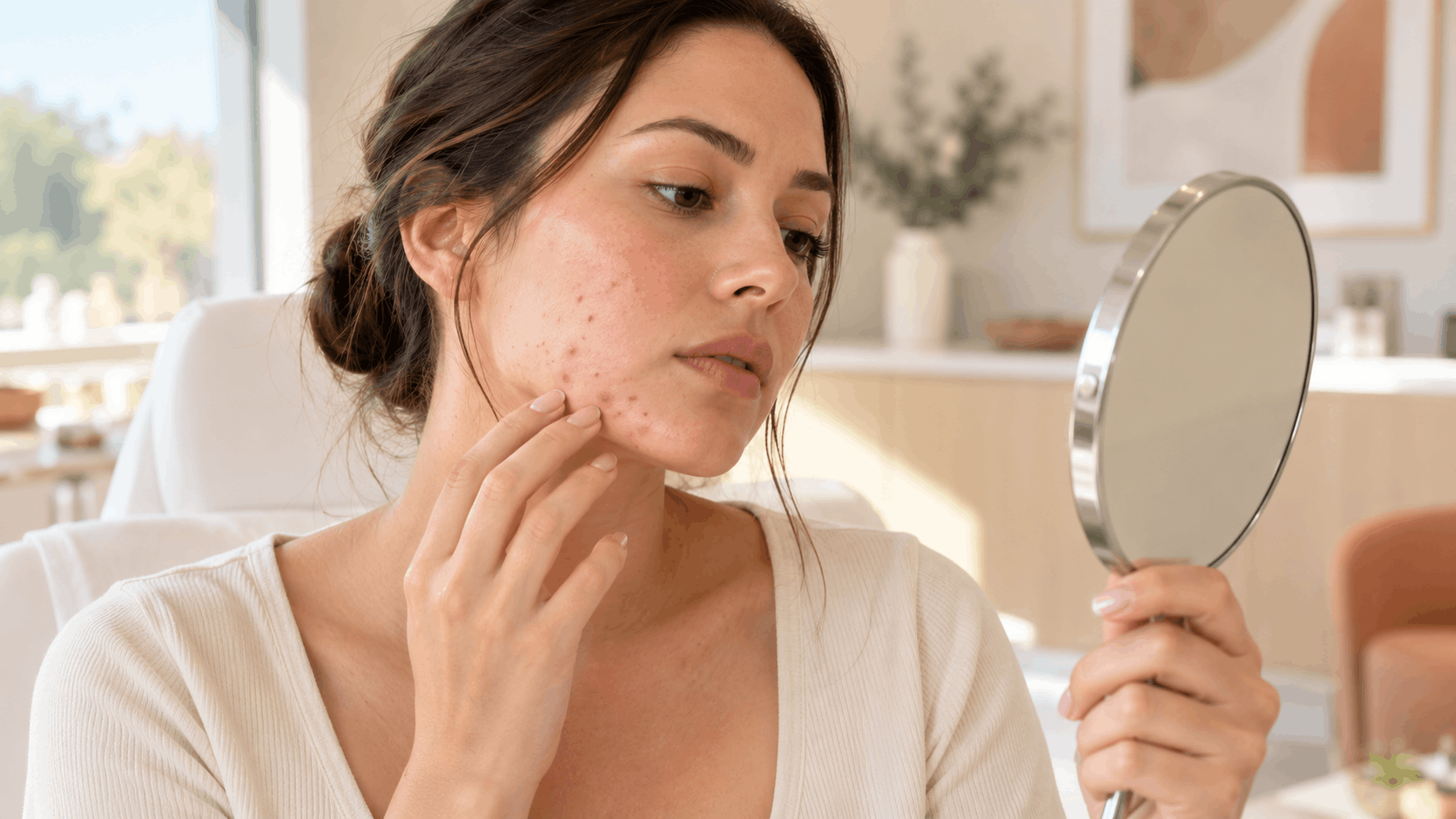
One day, your skincare routine seems perfectly capable of keeping your complexion smooth. Then fine lines become easier to see, pores appear more noticeable, makeup settles differently, and the skin no longer has quite the same even finish.
These skin texture changes with age are not caused by one dramatic event.
They develop as the epidermis and dermis gradually change, collagen production declines, elastic fibers become less efficient, cell renewal slows, and years of sun exposure accumulate. Aging skin may also become thinner, drier, less resilient, and more prone to visible roughness.
The result can include:
- Fine lines
- Roughness
- Enlarged-looking pores
- Uneven tone
- Dry or crepey areas
- Reduced firmness
- Acne scars that seem more noticeable
- A complexion that reflects light less evenly
Skincare can support hydration and protect the skin, but persistent textural concerns may benefit from treatments that stimulate renewal or collagen remodeling at different depths.
Genesis MedSpa offers several options for texture improvement, including Scarlet RF, MicroPen microneedling, CO2 laser resurfacing, and BioRePeel. The right choice depends on the severity of the concern, skin type, recovery tolerance, and how much change you realistically want.
Jump To:
- TL;DR – Quick Guide
- Detailed Breakdown
- Why Do Under-Eye Bags Form?
- Why Can't Eye Cream Fix Every Under-Eye Bag?
- Is It an Under-Eye Bag or a Tear-Trough Hollow?
- How Can Agnes RF Treat Under-Eye Bags?
- Is Agnes RF a Non-Surgical Alternative to Blepharoplasty?
- What If Hollowness Is Making the Bags Look Worse?
- Where Does PRP Filler Fit?
- Can Sculptra Help With Under-Eye Aging?
- Why Can Adding More Filler Sometimes Make Under-Eye Bags Worse?
- Can Lifestyle Changes Reduce Under-Eye Bags?
- How Do You Choose the Right Non-Surgical Treatment?
- When Is Surgery Still the Better Option?
- Key Takeaways
- FAQs
TL;DR – Quick Guide
Here is the quick explanation of skin texture changes with age:
- Collagen declines: Aging reduces collagen production and changes how existing collagen is organized.
- Elastin changes: Skin gradually loses some of its ability to stretch and return to its original position.
- Cell renewal slows: Dead surface cells may accumulate more noticeably, contributing to roughness and dullness.
- Skin becomes drier: Oil production and moisture retention can decline with age.
- Sun damage builds: UV exposure contributes to wrinkles, uneven pigmentation, roughness, and reduced elasticity.
- Pores may look larger: Reduced firmness and accumulated oil or debris can make pore openings appear more visible.
- MicroPen: Uses controlled microneedling to stimulate renewal and improve mild-to-moderate texture concerns.
- Scarlet RF: Combines microneedling and radiofrequency for texture, firmness, pores, wrinkles, and scars.
- CO2 laser: Offers more intensive resurfacing for deeper wrinkles, scars, sun damage, and uneven texture.
- BioRePeel: Provides chemical exfoliation and hydration with less recovery than aggressive resurfacing.
Bottom line: skin texture changes with age are normal, but the right skincare and professional treatment plan can improve smoothness, tone, firmness, and overall skin quality.
Detailed Breakdown
Why Does Skin Texture Change With Age?
Skin aging occurs through both intrinsic and extrinsic processes.
Intrinsic aging refers to the biological changes that occur over time. Extrinsic aging reflects environmental and lifestyle factors, especially cumulative ultraviolet exposure.
Research shows that aging affects both the epidermis and dermis. The epidermis can become thinner, while the dermis experiences changes in fibroblasts, collagen, elastin, and other structural components responsible for strength and resilience.
These changes affect the way skin:
- Holds moisture
- Repairs itself
- Reflects light
- Responds to movement
- Maintains firmness
- Sheds surface cells
- Recovers from environmental damage
Smooth skin reflects light relatively evenly. When the surface becomes dry, lined, scarred, or irregular, light scatters differently and the complexion can appear rougher or duller.
That is why texture is not simply about what the skin feels like.
It also changes how the skin looks.
How Does Collagen Loss Affect Texture?
Collagen is the primary structural protein in the skin.
It helps support firmness, density, and resilience. With age, collagen synthesis declines while existing fibers can become fragmented or disorganized. These changes contribute to fine lines, wrinkles, reduced firmness, and a less uniform surface.
Think of youthful collagen as a tightly organized support system beneath the skin.
As that structure changes, the surface can begin to show:
- Fine creases
- Unevenness
- Laxity
- More visible pores
- Greater prominence of old scars
This is why so many professional texture treatments focus on stimulating a controlled repair response.
They are not simply polishing the skin.
They are attempting to encourage remodeling beneath the surface.
What Happens to Elastin?
Elastin gives skin the ability to stretch and recoil.
Age-related changes can reduce the quality and organization of elastic fibers, contributing to laxity and a skin surface that does not bounce back as readily. The National Institute on Aging notes that the loss of collagen and elastic fibers contributes to wrinkles, fragility, and visible aging.
Sun exposure can accelerate these changes.
Chronically sun-damaged skin may become leathery, uneven, wrinkled, or less elastic because UV radiation damages healthy skin cells and contributes to photoaging.
This means someone can experience both:
- Natural age-related texture changes
- Premature texture changes caused by accumulated UV exposure
Most adults have some combination of the two.
Why Does Aging Skin Become Drier and Rougher?
Oil and sweat gland activity can decline over time, making older skin more likely to feel dry or rough. Hormonal changes, including those associated with menopause, may also contribute to thinning and dryness.
When skin lacks adequate moisture, fine lines can look deeper and texture may appear more obvious.
A moisturizer can help by trapping water in the skin, temporarily softening the appearance of some fine lines and making the complexion look brighter.
However, moisturizer cannot completely correct:
- Deep acne scars
- Significant collagen loss
- Pronounced wrinkles
- Substantial sun damage
- Structural skin laxity
It remains essential, but it is not a replacement for every resurfacing or collagen-remodeling treatment.
Why Do Pores Look Larger With Age?
Pores do not literally open and close like tiny doors.
Their visibility can change, though.
Pores may look larger when they contain excess oil or debris, but aging can also make them appear more noticeable as surrounding skin loses firmness and support. Sun damage and uneven texture can further emphasize their appearance.
Genesis MedSpa’s large pore treatments include chemical peels, microneedling, laser resurfacing, and other customized options intended to improve clarity and smoothness.
No treatment permanently removes pores because pores are normal anatomical structures.
The realistic goal is to reduce their visible prominence by improving the surrounding skin and addressing buildup where appropriate.
How Does Sun Exposure Change Skin Texture?
UV exposure is one of the most significant preventable contributors to premature skin aging.
The American Academy of Dermatology explains that repeated unprotected exposure causes damage to accumulate, leading to wrinkles, age spots, loose skin, blotchy tone, and other visible changes.
Sun damage can make texture appear:
- Rough
- Dry
- Uneven
- Leathery
- Creased
- Blotchy
This is also why professional treatments should be paired with consistent sun protection.
Without it, you may continue creating the same damage you are paying to improve.
Broad-spectrum sunscreen, protective clothing, shade, and avoiding tanning beds all help reduce additional photoaging.
Can Fine Lines Make Skin Look Rougher?
Yes.
Even shallow lines create small variations in the skin’s surface, changing how light reflects and how makeup sits.
Dynamic expression lines may initially appear mainly during movement. Over time, repeated folding and changes in collagen can make some lines visible even when the face is relaxed.
Genesis MedSpa’s fine lines and wrinkles treatments include multiple approaches because wrinkles can involve movement, volume loss, texture changes, collagen decline, and sun damage.
A neurotoxin may help a movement-related line.
A resurfacing treatment may improve textural damage.
An injectable may address volume loss.
They are not interchangeable tools.
How Does MicroPen Improve Skin Texture?
MicroPen microneedling uses fine needles to create controlled microchannels in the skin.
These micro-injuries trigger a repair response that supports collagen and elastin production. Genesis MedSpa uses MicroPen for concerns including fine lines, acne scars, enlarged pores, uneven texture, and hyperpigmentation.
MicroPen may make sense when the goals include:
- Smoother texture
- Less visible pores
- Softer fine lines
- Improvement in mild acne scarring
- More even-looking tone
- Gradual collagen stimulation
Genesis describes a typical series as approximately three to six treatments spaced four to six weeks apart, although the correct plan depends on the skin and treatment goal. Temporary redness and mild swelling may occur after treatment.
Microneedling is generally less intensive than CO2 resurfacing.
That also means it may produce more gradual change.
How Is Scarlet RF Different From Regular Microneedling?
Scarlet RF combines microneedling with radiofrequency energy.
The needles create controlled channels while RF energy delivers heat at selected depths. Genesis MedSpa positions the treatment for skin tightening, fine lines, wrinkles, acne scars, enlarged pores, uneven texture, and reduced elasticity.
That added thermal energy distinguishes Scarlet RF from conventional microneedling.
It may be considered when texture changes occur alongside:
- Mild laxity
- Reduced firmness
- More established wrinkles
- Acne scarring
- Enlarged-looking pores
- Broader collagen loss
Genesis states that some patients see early changes within weeks, while collagen-related improvement continues over several months. Its page recommends approximately three to six sessions for optimal results in many cases.
This is not an instant facelift.
It is a collagen-remodeling treatment intended to produce progressive improvement.
When Is CO2 Laser Resurfacing More Appropriate?
CO2 laser resurfacing is a more intensive texture treatment.
It uses fractional laser energy to create controlled columns of injury while removing damaged surface tissue and stimulating deeper collagen renewal. Genesis MedSpa uses CO2 laser resurfacing for wrinkles, acne scars, sun damage, hyperpigmentation, uneven tone, and more substantial texture concerns.
CO2 treatment may be considered when someone wants more significant improvement in:
- Deeper wrinkles
- Pronounced sun damage
- Acne scarring
- Rough texture
- Uneven pigmentation
- Reduced firmness
The tradeoff is recovery.
Genesis notes that redness, swelling, peeling, and flaking commonly occur during the initial healing period, with continued improvement over several months as collagen rebuilds.
This makes CO2 laser very different from a low-downtime peel or standard microneedling treatment.
A more powerful treatment usually asks more from the recovery calendar.
What Does BioRePeel Do for Texture?
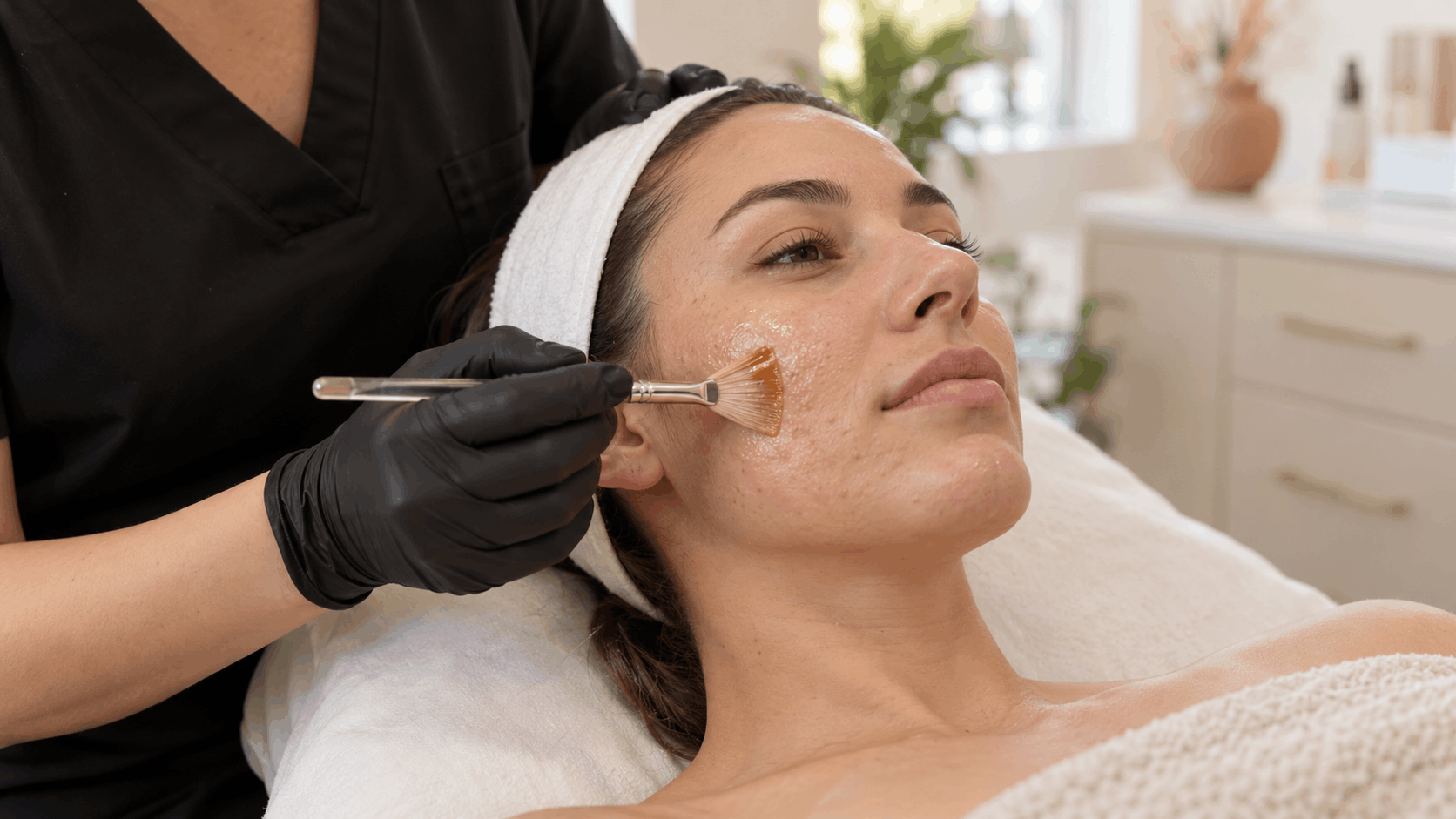
BioRePeel is a chemical peel designed to exfoliate, hydrate, and refresh the skin with less visible peeling than many traditional peels.
Genesis MedSpa uses it for:
- Fine lines
- Dullness
- Uneven texture
- Acne and post-acne marks
- Hyperpigmentation
- Sun damage
- Dehydrated-looking skin
The formula combines exfoliating acids with other ingredients intended to support skin renewal and hydration. Genesis recommends a series of approximately four to six treatments spaced around two weeks apart for many patients seeking optimal results.
BioRePeel may suit someone who wants:
- Surface-level smoothing
- Brighter skin
- Mild fine-line improvement
- Less downtime
- Regular complexion maintenance
It is not equivalent to CO2 resurfacing.
A gentle peel may improve surface roughness and radiance, while deeper scars or wrinkles may require a more intensive approach.
Which Treatment Is Best for Age-Related Texture?
There is no single best treatment because skin texture changes with age vary considerably.
A useful comparison looks like this:
BioRePeel may fit when:
The concern is mild roughness, dullness, surface buildup, or uneven tone and minimal downtime is a priority.
MicroPen may fit when:
The goal is gradual improvement in pores, fine lines, mild scars, and general texture through mechanical collagen stimulation.
Scarlet RF may fit when:
Texture concerns occur alongside laxity, reduced firmness, wrinkles, scars, or more visible pores.
CO2 laser may fit when:
The concern is more advanced sun damage, deeper wrinkles, significant roughness, or acne scarring and the patient accepts more downtime.
The treatment decision should also consider:
- Skin tone
- Medical history
- Active skin conditions
- Previous scarring
- Pigmentation risk
- Medications
- Recovery tolerance
- Seasonal sun exposure
- Desired intensity
- Treatment budget
Genesis MedSpa may also recommend a staged plan rather than trying to do everything at once.
Sometimes a series of moderate treatments makes sense.
Sometimes one more intensive treatment is appropriate.
Sometimes better skincare and sun protection need to come first.
What Can You Do at Home?
Professional treatments work best when daily habits protect the progress.
Helpful basics include:
- Use a gentle cleanser.
- Moisturize consistently.
- Apply broad-spectrum sunscreen every day.
- Avoid tanning beds.
- Introduce active products gradually.
- Do not over-exfoliate.
- Follow treatment-specific aftercare.
- Avoid picking at peeling or healing skin.
- Use retinoids only when appropriate and tolerated.
- Seek evaluation for changing or suspicious skin lesions.
The AAD emphasizes sun protection as the foundation of an effective anti-aging routine because UV exposure accelerates wrinkles, uneven tone, and other texture changes.
No facial, peel, laser, or microneedling series makes the skin immune to future damage.
Maintenance is not optional simply because the procedure worked.
Key Takeaways
- Skin texture changes with age because the epidermis, dermis, collagen, elastin, moisture balance, and cellular renewal all change over time.
- Aging can make skin thinner, drier, less elastic, and more prone to wrinkles and fragility.
- Collagen production declines while existing collagen can become fragmented and disorganized, contributing to lines, laxity, and unevenness.
- Accumulated sun exposure accelerates wrinkles, roughness, pigmentation, and reduced firmness.
- Pores cannot be permanently erased, but improving buildup, texture, and surrounding firmness can reduce their visible prominence.
- MicroPen microneedling creates controlled microchannels to stimulate collagen and improve fine lines, scars, pores, and texture.
- Scarlet RF adds radiofrequency energy to microneedling and may suit texture concerns accompanied by laxity or reduced firmness.
- CO2 laser resurfacing is a more intensive option for deeper wrinkles, acne scars, sun damage, and significant uneven texture.
- BioRePeel provides chemical exfoliation, hydration, and surface renewal with less downtime than aggressive resurfacing.
- More intensive treatment does not automatically mean a better treatment; recovery tolerance, skin type, risk, and goals matter.
- Daily moisturizing and sun protection help preserve results and reduce additional premature aging.
- Genesis MedSpa can assess the depth and cause of textural concerns before recommending a peel, microneedling, RF, laser, or combination plan.
FAQs
1. Why does skin texture become rougher with age?
Skin texture changes with age as collagen production declines, elastic fibers change, skin becomes thinner, and moisture retention decreases. Slower cellular turnover and accumulated environmental damage can make roughness, fine lines, and uneven tone more noticeable. Sun exposure can accelerate many of these changes by damaging healthy skin cells over time.
2. Can microneedling improve age-related skin texture?
Microneedling may improve fine lines, enlarged-looking pores, mild scars, and uneven texture by creating controlled micro-injuries that stimulate collagen remodeling. Genesis MedSpa uses MicroPen for gradual skin renewal with relatively limited downtime compared with more aggressive resurfacing. Multiple sessions may be recommended depending on the depth of the concern and the patient’s response.
3. Is Scarlet RF better than regular microneedling?
Scarlet RF is not universally better, but it adds controlled radiofrequency heat to the mechanical stimulation created by microneedles. That can make it relevant when texture changes occur alongside mild laxity, reduced firmness, wrinkles, scars, or enlarged-looking pores. Conventional MicroPen treatment may still be appropriate when the primary goal is straightforward collagen stimulation with no added thermal energy.
4. How much downtime does CO2 laser require?
Genesis MedSpa notes that redness, mild swelling, peeling, and flaking commonly occur during the first one to two weeks after CO2 laser resurfacing. The visible surface recovery happens sooner than the full remodeling process, which can continue for several months as collagen production increases. Your exact downtime depends on the treatment settings, area treated, skin response, and aftercare.
5. Which treatment is best for skin texture changes with age?
The best option depends on whether the main concern is mild roughness, enlarged-looking pores, fine lines, laxity, acne scars, or deeper sun damage. BioRePeel may suit surface renewal, MicroPen can provide gradual microneedling benefits, Scarlet RF adds tightening-focused energy, and CO2 laser offers more intensive resurfacing. A consultation at Genesis MedSpa can match treatment depth and recovery expectations to the specific skin texture changes with age you want to improve.