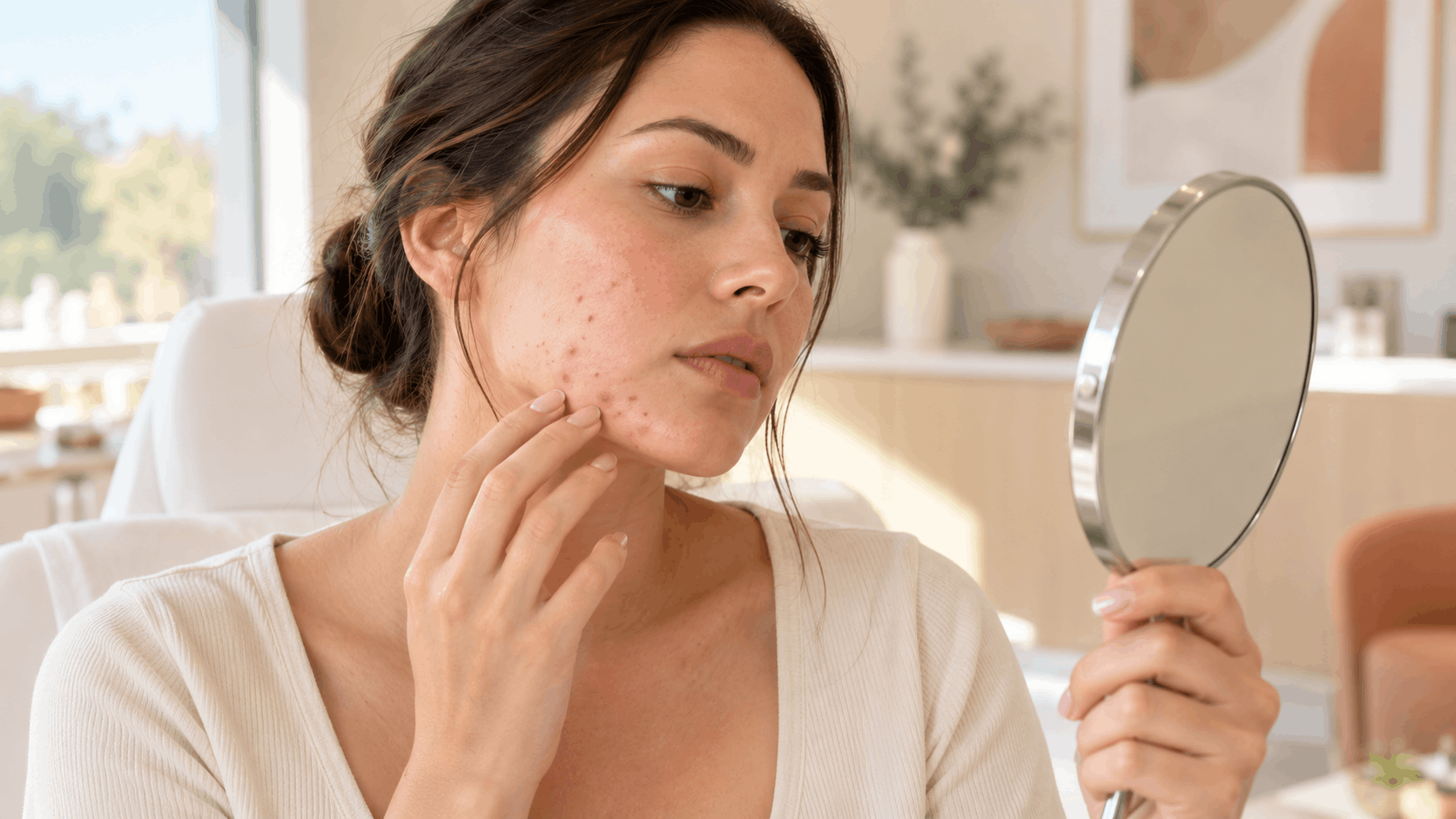
Freckles can feel like familiar landmarks on your skin—until they suddenly look darker, larger, or more numerous than you remember.
When people notice freckles getting darker with age, the explanation is often more complicated than aging alone. Ultraviolet exposure can darken existing freckles, while years of accumulated sun damage can also create persistent brown spots called solar lentigines, commonly known as sunspots or age spots.
Those two types of pigmentation may look similar, but they do not behave exactly the same way.
True freckles often become more noticeable after sun exposure and may fade when UV exposure decreases. Solar lentigines, by contrast, tend to remain visible throughout the year and become more common with age.
Genesis MedSpa addresses both sun damage and age spots and broader uneven skin tone and hyperpigmentation through customized treatment plans.
Before trying to erase every brown spot, however, it is important to identify what the spot actually is.
Jump To:
- TL;DR – Quick Guide
- Detailed Breakdown
- Why Do Under-Eye Bags Form?
- Why Can't Eye Cream Fix Every Under-Eye Bag?
- Is It an Under-Eye Bag or a Tear-Trough Hollow?
- How Can Agnes RF Treat Under-Eye Bags?
- Is Agnes RF a Non-Surgical Alternative to Blepharoplasty?
- What If Hollowness Is Making the Bags Look Worse?
- Where Does PRP Filler Fit?
- Can Sculptra Help With Under-Eye Aging?
- Why Can Adding More Filler Sometimes Make Under-Eye Bags Worse?
- Can Lifestyle Changes Reduce Under-Eye Bags?
- How Do You Choose the Right Non-Surgical Treatment?
- When Is Surgery Still the Better Option?
- Key Takeaways
- FAQs
TL;DR – Quick Guide
Here is the quick explanation of freckles getting darker with age:
- Sunlight darkens freckles: Ultraviolet exposure stimulates pigment production, making freckles more noticeable.
- Some “freckles” are age spots: Persistent brown spots that appear over time may be solar lentigines caused by cumulative UV exposure.
- Freckles and age spots behave differently: Freckles often fade when sun exposure decreases, while solar lentigines usually remain visible.
- Sun protection matters: Consistent UV protection can help reduce additional darkening and new sun-related pigmentation.
- Limelight IPL: May be considered for surface-level brown spots, redness, sun damage, and uneven tone.
- Pico Laser: Uses very short laser pulses to target unwanted pigment and may suit certain pigmentation concerns.
- VI Peel Precision Plus: A chemical peel designed for hyperpigmentation, melasma, sun damage, and dark spots.
- Changing spots need evaluation: A new or changing pigmented lesion should be medically assessed before cosmetic treatment.
Bottom line: freckles getting darker with age may reflect active sun exposure, accumulated UV damage, or a different type of pigmented lesion—not simply the passage of time.
Detailed Breakdown
Why Do Freckles Become Darker?
Freckles, medically called ephelides, contain increased melanin even though the number of pigment-producing cells is generally normal.
Sun exposure activates pigment production, which is why freckles frequently darken during spring and summer and fade during periods of reduced UV exposure. Mayo Clinic describes this tendency to darken with ultraviolet exposure as a hallmark characteristic of freckles.
The process can become more noticeable with age because sunlight exposure accumulates.
Years of outdoor activities, driving, vacations, tanning, and inconsistent sunscreen use can leave increasingly visible pigmentation on frequently exposed areas such as the:
- Face
- Chest
- Shoulders
- Arms
- Backs of the hands
The American Academy of Dermatology notes that sun damage builds over time and can eventually appear as freckles, age spots, wrinkles, and other visible changes.
So, aging itself is not necessarily “feeding” the freckles.
The bigger contributor is often the lifetime of UV exposure accompanying that aging.
Are They Really Freckles—or Age Spots?
This is the most important distinction in the article.
True freckles usually become darker with sun exposure and may fade during winter or periods with less UV stimulation. Solar lentigines remain visible even without recent sun exposure and tend to become more common as people get older.
Solar lentigines are also called:
- Age spots
- Sunspots
- Liver spots
- Senile freckles
Despite the nickname “liver spots,” they are not caused by the liver.
They develop predominantly on sun-exposed skin because of chronic UV exposure. They may gradually become larger, darker, or more numerous and can cluster into a mottled pattern.
This means that what someone describes as freckles getting darker with age may actually be:
- Existing freckles responding to recent sun exposure
- Newly visible solar lentigines
- A combination of both
- Another form of hyperpigmentation
- A mole or other pigmented lesion requiring evaluation
A professional skin assessment helps separate those possibilities.
Why Does Sun Damage Accumulate?
Skin does not forget ultraviolet exposure simply because a sunburn fades.
UV radiation damages skin cells, and repeated unprotected exposure can create changes that become more visible years later. The AAD explains that accumulated sun damage can lead not only to cosmetic changes such as freckles and age spots but also to precancerous growths and skin cancer.
This is why pigment treatment without sun protection can become an expensive loop.
You lighten the spots.
You expose the skin to more UV radiation.
The pigment returns or new spots appear.
Consistent protection helps reduce that cycle.
Useful habits include:
- Applying broad-spectrum sunscreen daily
- Reapplying during prolonged outdoor exposure
- Wearing hats and protective clothing
- Seeking shade when practical
- Avoiding indoor tanning
- Following post-treatment sun precautions carefully
Sun protection cannot erase every existing spot, but it can help reduce further damage and premature skin aging.
When Should a Darkening Freckle Be Checked?
Not every darker freckle is dangerous.
But a spot should not be cosmetically treated simply because it looks like a freckle.
The American Cancer Society advises having spots evaluated promptly when they are new or changing in size, shape, or color. Other warning signs can include irregular borders, multiple colors, bleeding, itching, pain, or a lesion that looks noticeably different from surrounding spots.
Before laser, IPL, or a chemical peel, seek medical evaluation for a spot that:
- Changes rapidly
- Becomes asymmetrical
- Develops an irregular border
- Contains multiple colors
- Bleeds or crusts
- Itches or becomes painful
- Looks unlike your other freckles
- Appears newly and continues changing
Aesthetic pigment treatments are intended for appropriate benign pigmentation.
They are not substitutes for diagnosing suspicious lesions.
When Is Treatment Worth Considering?
Freckles and age spots are usually treated for cosmetic reasons rather than because they are medically harmful.
Treatment may be worth discussing when pigmentation:
- Makes the complexion appear uneven
- Has become more noticeable over time
- Does not improve with skincare
- Is associated with broader sun damage
- Affects the face, chest, hands, or other highly visible areas
- Has already been assessed as appropriate for cosmetic treatment
The treatment should match the pigment type, depth, skin tone, medical history, and risk of post-inflammatory hyperpigmentation.
Genesis MedSpa offers a broader menu of facial and laser services addressing pigmentation, skin tone, texture, acne, and other concerns. Its pigmentation pages emphasize customized plans rather than presenting one treatment as the answer for every dark spot.
That customization is especially important for darker skin tones and pigment conditions such as melasma, which may behave differently from ordinary freckles or sunspots.
How Does Limelight IPL Treat Brown Spots?
Limelight IPL uses intense pulsed light rather than a single laser wavelength.
Genesis MedSpa positions it for concerns including:
- Sun damage
- Brown spots
- Hyperpigmentation
- Redness
- Uneven skin tone
The light energy targets selected pigment and vascular concerns, allowing treated brown spots to darken temporarily before gradually fading or flaking. Genesis notes that initial redness and darkening of pigment may occur during the early healing period.
Limelight IPL may be especially relevant when pigmentation is relatively superficial and appears alongside redness or broader photodamage.
However, IPL is not automatically appropriate for every skin tone, every season, or every type of pigment. Recent tanning, melasma, medication use, and individual pigmentation risk can affect treatment planning.
When Might Pico Laser Be Considered?
Pico Laser uses ultra-short picosecond pulses to target unwanted pigment.
Rather than relying solely on prolonged thermal heating, picosecond technology delivers energy in extremely brief bursts designed to fragment pigment particles. Genesis MedSpa uses Pico Laser for pigmentation, sun damage, acne scars, fine lines, and broader skin rejuvenation.
Pico treatment may enter the conversation when the concern involves:
- Dark spots
- Sun-related pigmentation
- Uneven tone
- Certain deeper pigment concerns
- Pigmentation combined with textural goals
Genesis states that treatment plans commonly involve multiple sessions, with the exact number determined by the concern and response.
“Laser” is not one universal treatment category.
Device type, wavelength, settings, skin tone, pigment depth, and provider judgment all influence safety and results.
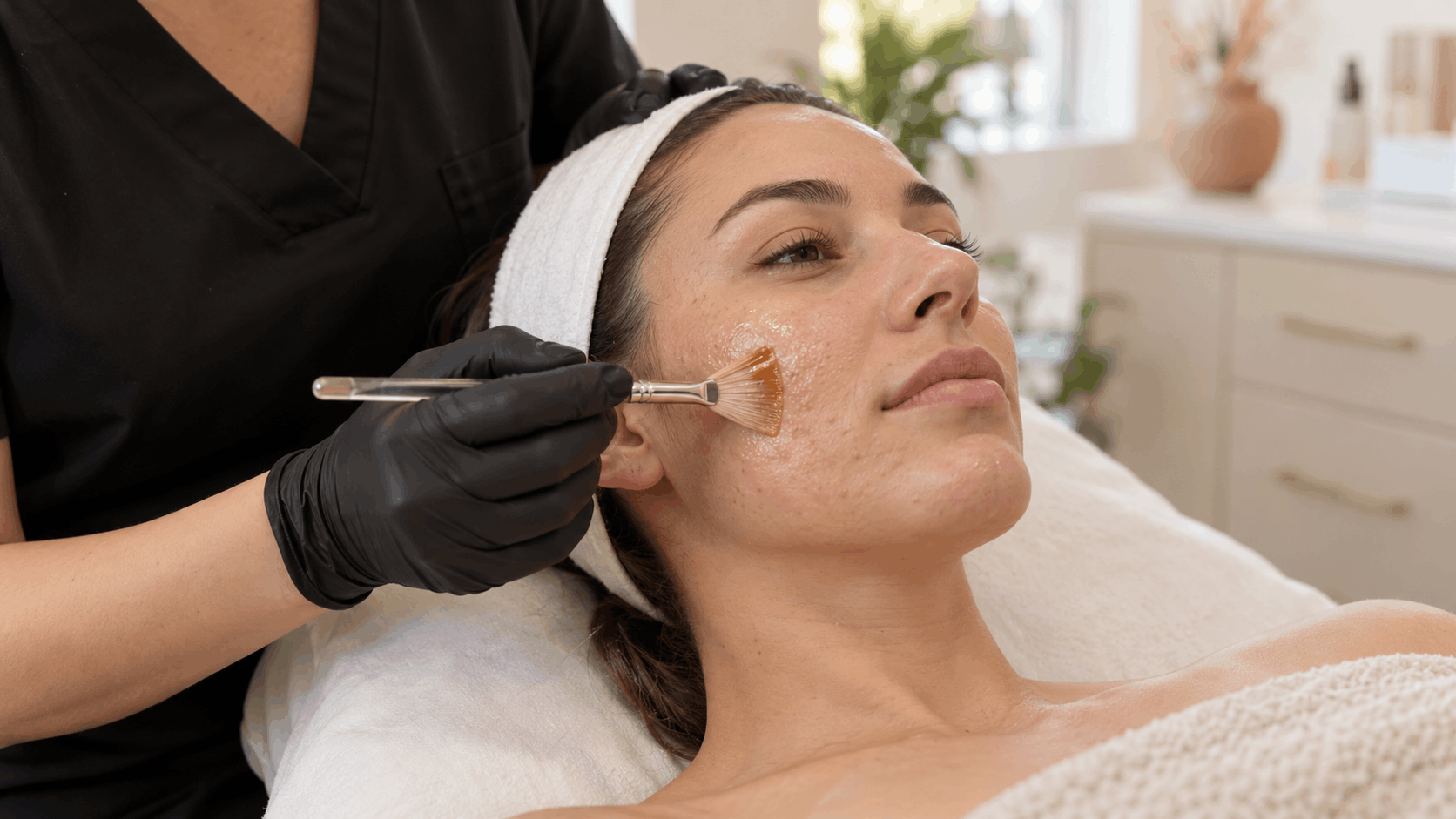
What Does VI Peel Precision Plus Do?
VI Peel Precision Plus is a medical-grade chemical peel formulated for hyperpigmentation, melasma, sun damage, and dark spots.
Genesis MedSpa describes it as combining the VI Peel base formula with targeted brightening components designed to suppress excess pigment production and help break up existing discoloration. Peeling generally develops several days after treatment as pigmented outer skin cells shed.
This may make the peel useful when pigmentation is accompanied by:
- Dullness
- Uneven skin tone
- Surface discoloration
- Textural irregularities
- Broader photodamage
Chemical peels and light-based treatments work differently.
A provider may recommend one, the other, or a staged combination depending on the skin and pigmentation pattern.
Which Is Better: IPL, Pico Laser, or a Chemical Peel?
There is no universal winner.
The right option depends on what the brown spots actually are.
Limelight IPL may fit when:
Surface-level pigmentation, redness, and sun damage occur together.
Pico Laser may fit when:
Targeted laser treatment is appropriate for pigmentation depth, skin tone, and accompanying texture concerns.
VI Peel Precision Plus may fit when:
A chemical exfoliation and brightening approach suits broader hyperpigmentation or sun-related discoloration.
A provider should also consider:
- Skin tone
- Pigment depth
- Recent sun exposure
- Melasma history
- Previous treatment reactions
- Medications
- Downtime tolerance
- Seasonal timing
- Desired speed of improvement
The most powerful device is not automatically the safest or smartest choice.
The best treatment is the one that fits the diagnosis.
Can Freckles or Age Spots Come Back?
Yes.
Treatment can fade visible pigmentation, but it cannot remove your genetic tendency to freckle or erase the fact that your skin remains capable of producing melanin.
New UV exposure can darken existing freckles, trigger new freckles, and contribute to additional solar lentigines.
That makes maintenance part of the plan.
Depending on the treatment and your skin, maintenance may include:
- Daily sunscreen
- Protective clothing
- Medical-grade skincare
- Periodic professional treatments
- Avoiding tanning
- Monitoring new or changing lesions
Genesis MedSpa notes that ongoing sun protection and occasional maintenance treatments can help preserve results after pigmentation procedures.
Treating pigment without protecting the skin is a little like repainting a wall while the roof is still leaking.
Key Takeaways
- Freckles getting darker with age is often linked to UV exposure rather than aging alone.
- True freckles commonly darken after sun exposure and may fade when UV exposure decreases.
- Persistent brown spots that appear with age may actually be solar lentigines, also called age spots or sunspots.
- Solar lentigines develop primarily from cumulative ultraviolet exposure and generally do not fade during winter.
- Sun damage accumulates over time and can lead to freckles, age spots, wrinkles, precancerous growths, and skin cancer.
- Any spot that is new or changing in size, shape, or color should be medically evaluated before cosmetic treatment.
- Limelight IPL may help address superficial brown spots, redness, sun damage, and uneven tone.
- Pico Laser uses ultra-short pulses to target unwanted pigment and may suit selected pigmentation concerns.
- VI Peel Precision Plus is formulated for dark spots, hyperpigmentation, melasma, and sun damage.
- No treatment permanently prevents the skin from producing pigment again.
- Consistent sun protection helps preserve treatment results and reduce additional UV-related changes.
- Genesis MedSpa can evaluate pigmentation and recommend an appropriate light, laser, peel, or skincare plan.
FAQs
1. Why are my freckles getting darker with age?
Freckles getting darker with age often reflects repeated or recent ultraviolet exposure, which stimulates melanin production and makes existing freckles more visible. Some newly noticed spots may actually be solar lentigines caused by accumulated sun damage rather than true freckles. A skin assessment can help distinguish freckles, age spots, and other pigmented lesions.
2. What is the difference between freckles and age spots?
Freckles often become darker with sun exposure and may fade when ultraviolet exposure decreases. Age spots, or solar lentigines, are persistent areas of pigmentation caused mainly by chronic UV exposure and become more common with age. Because they can look similar, diagnosis should come before choosing a cosmetic treatment.
3. Can Limelight IPL remove freckles and sunspots?
Limelight IPL may reduce suitable superficial brown spots, sun damage, redness, and uneven skin tone. Treated pigment may temporarily darken before fading or flaking during recovery. Results and candidacy depend on the pigment type, skin tone, recent sun exposure, and treatment settings.
4. Is Pico Laser better than a chemical peel for pigmentation?
Neither treatment is automatically better because Pico Laser and VI Peel Precision Plus address pigmentation through different mechanisms. Pico uses ultra-short laser pulses to target pigment, while the peel exfoliates pigmented surface layers and uses brightening ingredients to address excess melanin. A provider should select treatment according to pigment depth, skin type, diagnosis, and downtime preferences.
5. When should a dark freckle be checked by a doctor?
A dark spot should be evaluated if it is new or changing in size, shape, color, border, sensation, or behavior. Bleeding, itching, pain, crusting, rapid growth, or looking different from your other spots are additional reasons to seek assessment. Cosmetic laser, IPL, or peel treatment should wait until a suspicious lesion has been appropriately evaluated.