Dark circles can make the face look tired, shadowed, or older—even when you feel well-rested. For some people, the issue is not just pigmentation or lack of sleep. It may be caused by hollowing under the eyes, volume loss, thin skin, or shadows that form where the lower eyelid meets the cheek.
That is where under eye filler for dark circles may help. When the darkness is caused by hollowness or shadowing, carefully placed filler can soften the transition between the under-eye area and the upper cheek. The result can look brighter, smoother, and more refreshed without making the face look overfilled.
Natural-looking results depend heavily on proper patient selection, conservative placement, product choice, and provider experience. The under-eye area is delicate, so the goal should never be dramatic volume. The goal is subtle correction that helps the eyes look rested while preserving your natural facial expression.
If you are considering treatment, understanding when under eye filler works best can help you set realistic expectations and avoid results that look puffy, obvious, or unnatural.
Jump to:
- TLDR – Quick Guide
- Detailed Breakdown
- Why Melasma Comes Back So Easily
- Why Prevention Matters as Much as Treatment
- Chemical Peels for Melasma
- Why VI Peel Precision Plus Is Often Used for Pigmentation
- Prescription-Strength and Professional Skincare
- Sunscreen Is Non-Negotiable
- Heat and Melasma Recurrence
- Laser Treatments for Melasma
- Microneedling and Skin Barrier Support
- Why Maintenance Treatments Matter
- Common Mistakes That Make Melasma Worse
- What Actually Helps Prevent Melasma Recurrence
- When to Consider Professional Help
- Why Personalized Treatment Matters
- Key Takeaways
- FAQs
TLDR – Quick Guide
- Under eye filler works best for hollowing and shadow-related dark circles
- Natural results should look refreshed, not overfilled
- Conservative placement is key in the under-eye area
- Not all dark circles are caused by volume loss
- A consultation helps determine whether filler is the right option
Detailed Breakdown
What Causes Dark Circles Under the Eyes
Dark circles can happen for several reasons. Some people assume they are always caused by fatigue, but sleep is only one possible factor.
Common causes include:
- Under-eye hollowing
- Volume loss
- Genetics
- Thin skin
- Pigmentation
- Visible blood vessels
- Allergies
- Fluid retention
- Aging
- Dehydration
- Shadowing from facial structure
Under eye filler is most helpful when the darkness is caused by hollowing or shadows. If the area looks dark because the skin is deeply pigmented, filler may not fully correct the concern.
This is why identifying the cause matters. A treatment that works beautifully for one person’s dark circles may not be the right solution for someone else.
When Under Eye Filler Looks Most Natural
Under eye filler looks most natural when it is used to correct a true volume deficit. This usually means there is a hollow or tear trough that creates a shadow under the eyes.
In the right candidate, small amounts of filler can smooth the transition between the lower eyelid and cheek. This can reduce the shadow that makes the area appear darker or more tired.
Natural results should not make the under-eye area look swollen or overly full. Instead, the improvement should be subtle enough that people may notice you look more rested without knowing you had treatment.
This type of correction requires restraint. The under-eye area does not need much product, and overfilling can create puffiness, unevenness, or a heavy look.
When Under Eye Filler May Not Be the Best Option
Under eye filler is not the right solution for every type of dark circle. If the darkness is caused mainly by brown pigmentation, blue or purple vascular tones, allergies, or chronic puffiness, filler may not address the root problem.
Filler may also be less ideal for people who already have significant under-eye bags or fluid retention. Adding volume in an area that tends to hold fluid can make puffiness more noticeable.
In some cases, skin quality may need to be addressed before or instead of filler. Thin, crepey, or sun-damaged skin may benefit from treatments that support texture, firmness, or collagen rather than volume alone.
Patients dealing with multiple causes of discoloration can explore treatment options for under-eye circles and hollowing concerns to better understand which approach may fit their needs.
Why the Tear Trough Area Is So Delicate
The tear trough is the groove that can form between the lower eyelid and the upper cheek. It is one of the most delicate areas to treat because the skin is thin and the anatomy is complex.
Small changes in this area can make a noticeable difference. That is why careful technique matters so much.
If filler is placed too superficially, too heavily, or in the wrong patient, the result may look uneven or puffy. If it is placed conservatively and strategically, the result can look smooth and natural.
The goal is not to erase every line or create a completely flat under-eye area. A natural face has contours. The goal is to soften harsh shadows while keeping normal facial character.
How Under Eye Filler Helps Dark Circles
Under eye filler helps by adding subtle support beneath hollow areas. This can reduce the shadow that forms when the under-eye area dips inward.
Think of it as improving the light reflection under the eyes. When the hollow is softened, the area may look brighter because fewer shadows are being cast.
This does not mean filler changes the color of the skin itself. If the darkness is from pigmentation, filler may improve the appearance only slightly or not at all.
That is why a good consultation should look at both structure and skin tone. The provider should determine whether the dark circle is caused by shadow, pigment, vascular color, or a combination.
What Natural Results Should Look Like
Natural under-eye filler results should look soft, balanced, and refreshed. The under-eye area should blend more smoothly into the cheek without looking swollen.
Good results often look like:
- Less shadowing
- A smoother tear trough
- A more rested appearance
- Better under-eye brightness
- Balanced facial proportions
- Subtle improvement without obvious fullness
The result should still look like you. Under eye filler should not dramatically change your face or make the eyes look tight, heavy, or artificial.
The best outcome is often one that looks understated. People may comment that you look refreshed, but they should not immediately notice filler.
Why Less Is Usually Better
The under-eye area is not a place for aggressive correction. Because the skin is thin, even a small amount of filler can make a visible difference.
Using too much product can create puffiness, lumps, or a bluish cast under the skin. Overcorrection may also make the under-eye area look heavier instead of brighter.
A conservative approach helps protect the natural movement and softness of the face. It also allows the provider to build results gradually if needed.
Many patients are better served by starting with less product and reassessing after the filler settles. Natural-looking filler is often about precision, not volume.
The Role of Cheek Support
Sometimes dark circles look worse because the upper cheek has lost volume. When the cheek does not provide enough support, the under-eye hollow can appear deeper.
In these cases, treating only the tear trough may not create the most natural result. The provider may need to evaluate the cheek and midface to determine whether structural support is needed.
This does not mean every patient needs cheek filler. It means the under-eye area should be assessed as part of the whole face, not as an isolated concern.
When the cheek and under-eye transition are balanced, results often look smoother and more natural. This approach can help avoid placing too much filler directly under the eyes.
What to Expect During a Consultation
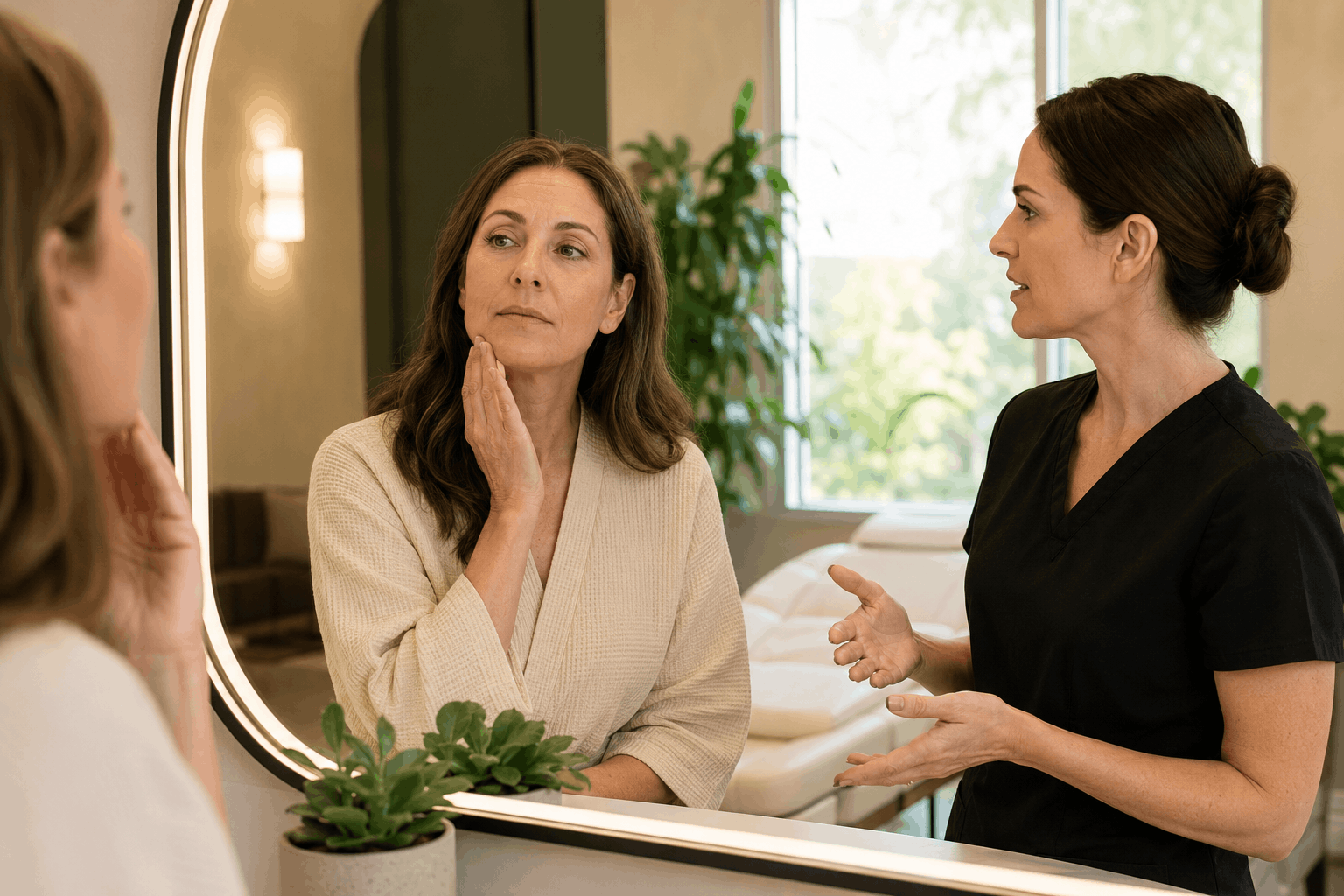
A consultation should begin with a careful evaluation of the under-eye area, cheek support, skin thickness, puffiness, and discoloration type. Your provider may ask about your goals, medical history, allergies, prior filler, and whether your under-eye darkness changes throughout the day.
They may also assess your face from different angles. Lighting and facial movement matter because under-eye shadows can look different depending on expression, posture, and environment.
The provider should explain whether filler is likely to help and what kind of improvement is realistic. If your dark circles are not mainly caused by hollowing, they may recommend another approach instead.
Patients interested in filler and injectable treatment options can use a consultation to determine whether under-eye filler is appropriate for their anatomy and goals.
What Happens During Treatment
If you are a good candidate, treatment is usually performed with careful, conservative placement. The provider may use a needle or cannula depending on the treatment plan and anatomy.
The process typically involves placing small amounts of filler in targeted areas to soften the hollow. The goal is smooth blending, not heavy filling.
Because the under-eye area is sensitive, precision is important. Your provider should work slowly and carefully to reduce the risk of unevenness or overcorrection.
You may notice improvement soon after treatment, but the area can also look slightly swollen at first. Final results are easier to judge once swelling has settled.
What Recovery Can Look Like
Recovery after under-eye filler is usually manageable, but the area may be more prone to swelling or bruising than other parts of the face. This is because the skin is thin and the tissue is delicate.
Temporary effects may include:
- Mild swelling
- Bruising
- Tenderness
- Slight unevenness
- Redness at injection points
- A feeling of fullness
These effects often improve as the filler settles and the tissue calms. It is important not to judge the final result too soon.
Your provider may give aftercare instructions, such as avoiding pressure on the area, intense exercise, alcohol, or certain products for a short period. Following those instructions can help support smoother healing.
When Results Start to Look Settled
Some improvement may be visible right away, but under-eye filler often needs time to settle. Swelling can temporarily make the area look fuller than expected.
In many cases, the result begins to look more natural over the following days to weeks. As swelling fades, the under-eye contour becomes easier to evaluate.
If the area still looks uneven or too full after it has fully settled, your provider can assess whether adjustment is needed. The under-eye area should be approached carefully, so follow-up is important.
Patience matters. The early post-treatment period is not always the final result.
How Long Under Eye Filler Results Last
The longevity of under-eye filler varies from person to person. Factors like metabolism, product type, placement, lifestyle, and anatomy can all influence how long results last.
Because the under-eye area does not move as much as areas like the lips, filler may last longer there for some patients. However, longevity should not be the only goal.
The priority should be a smooth, natural-looking result. Sometimes using less product more carefully creates a better outcome than trying to maximize duration with heavier correction.
Maintenance should be based on how the area looks and feels over time, not a fixed schedule for everyone.
Common Reasons Under Eye Filler Looks Unnatural
Under-eye filler can look unnatural when it is placed in the wrong patient, with the wrong product, or in excessive amounts. The area is unforgiving, so small mistakes may be more noticeable.
Common issues include:
- Puffiness
- Overfilling
- Lumps or uneven texture
- Bluish discoloration
- Filler placed too superficially
- Treating pigmentation as if it were hollowing
- Ignoring cheek support
- Poor candidate selection
This is why the provider’s judgment matters as much as injection skill. Knowing when not to treat is part of creating natural results.
A conservative plan can help reduce the risk of looking overdone. Under-eye filler should enhance the face, not distract from it.
How to Maintain Natural-Looking Results
Maintaining natural results involves both professional follow-up and good daily habits. The under-eye area is affected by hydration, sleep, allergies, sun exposure, and skin quality.
Helpful habits include:
- Staying hydrated
- Protecting the area from sun exposure
- Using gentle skincare
- Avoiding rubbing the eyes
- Managing allergies when possible
- Following aftercare instructions
- Returning for follow-up as recommended
Skincare can also support the appearance of the under-eye area. While skincare cannot replace volume, it may improve texture, hydration, and brightness.
Maintenance filler should be done thoughtfully. Adding more product too soon can increase the risk of puffiness or an unnatural look.
Who Is a Good Candidate
A good candidate for under eye filler for dark circles usually has visible hollowing or shadowing under the eyes. They may look tired even when they are rested because the tear trough creates a dark shadow.
Good candidates also have realistic expectations. Filler can soften hollows, but it may not fully correct pigmentation, puffiness, or skin laxity.
You may be a candidate if you notice:
- A hollow groove under the eyes
- Shadows that improve when the skin is gently lifted
- A tired appearance caused by volume loss
- Smooth skin with minimal puffiness
- Good overall skin quality
- Realistic goals for subtle improvement
A consultation is the best way to confirm whether filler is the right treatment. For some patients, another approach may create a better result.
Why Personalized Treatment Matters
Under eye filler is not a one-size-fits-all treatment. Two people can both have dark circles, but one may need filler while the other may need skin treatments, pigmentation care, allergy management, or no filler at all.
A personalized plan helps determine whether the darkness is caused by hollowing, pigment, vascular color, puffiness, or a combination of factors. This prevents overtreatment and helps support results that look natural.At Genesis MedSpa, patients can schedule a consultation to discuss whether under eye filler for dark circles is appropriate for their anatomy, goals, and overall facial balance.
Key Takeaways
- Under eye filler looks most natural when dark circles are caused by hollowing
- Conservative placement helps avoid puffiness or overfilled results
- Not all dark circles can be corrected with filler
- Cheek support and facial balance affect the final outcome
- A personalized consultation is essential for natural-looking results
FAQs
1. When does under eye filler for dark circles look natural?
Under eye filler for dark circles looks most natural when the darkness is caused by hollowing or shadowing. A conservative amount of filler can soften the tear trough and create a smoother transition into the cheek. The result should look refreshed rather than noticeably filled.
2. Can under eye filler fix all types of dark circles?
No, under eye filler cannot fix every type of dark circle. It works best for hollowing, but it may not fully correct pigmentation, visible blood vessels, allergies, or puffiness. A consultation helps determine what is causing the darkness and whether filler is the right option.
3. How long does under eye filler take to settle?
Some improvement may be visible right away, but swelling can make the area look fuller at first. The filler usually begins to look more settled over the following days to weeks. Final results should be evaluated after the area has had time to calm.
4. Why can under eye filler sometimes look puffy?
Under eye filler can look puffy if too much product is used, if it is placed too superficially, or if the patient naturally retains fluid in that area. The under-eye region is delicate, so small amounts of filler can make a big difference. Proper candidate selection and conservative technique help reduce this risk.
5. How do I know if I am a good candidate for under eye filler?
You may be a good candidate if your dark circles are mainly caused by hollowing or shadowing under the eyes. If you have significant puffiness, pigmentation, or loose skin, another treatment may be better. A personalized evaluation is the best way to choose the right approach.